
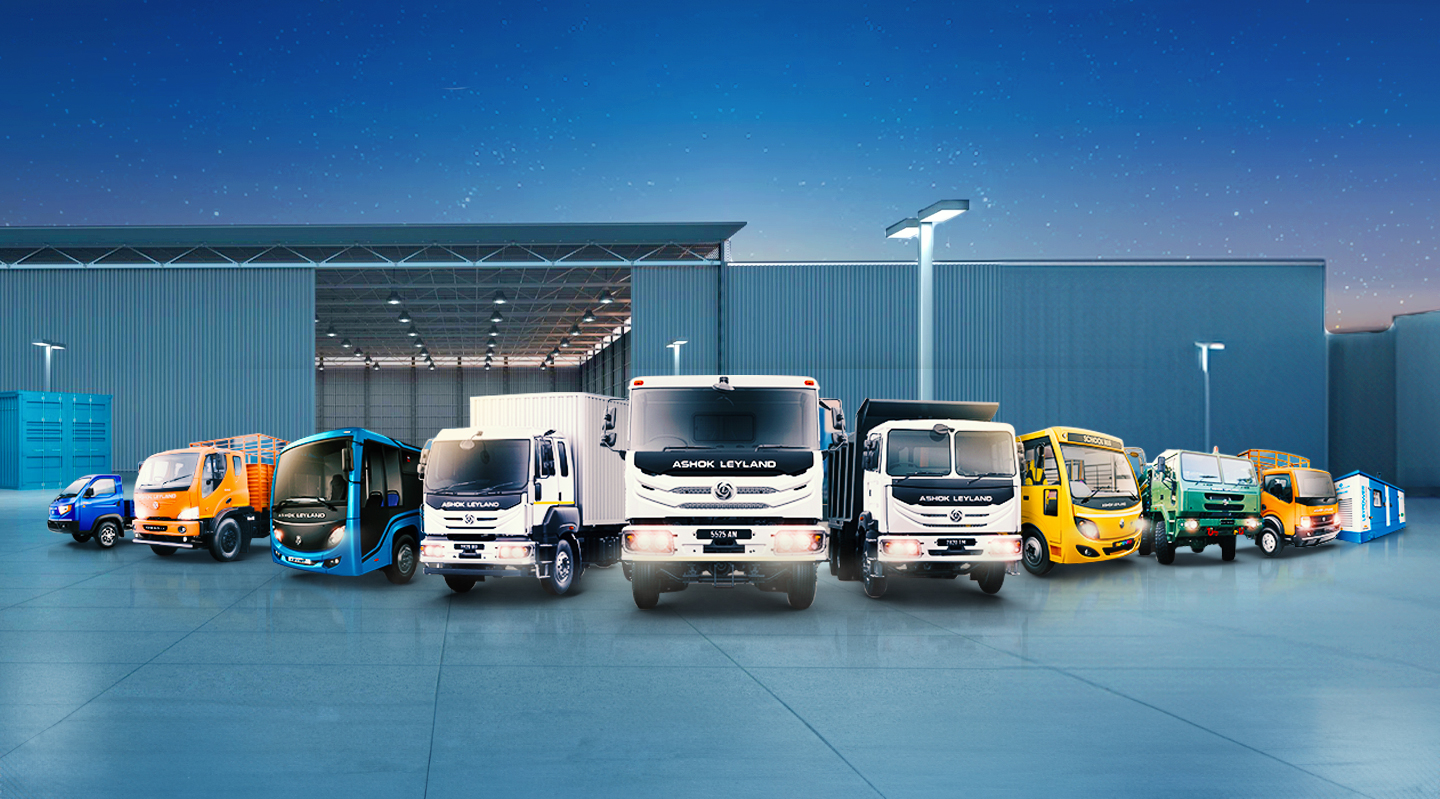
Across trucks, buses, technology, and global markets, the momentum is building — and the company believes it is only just getting started.
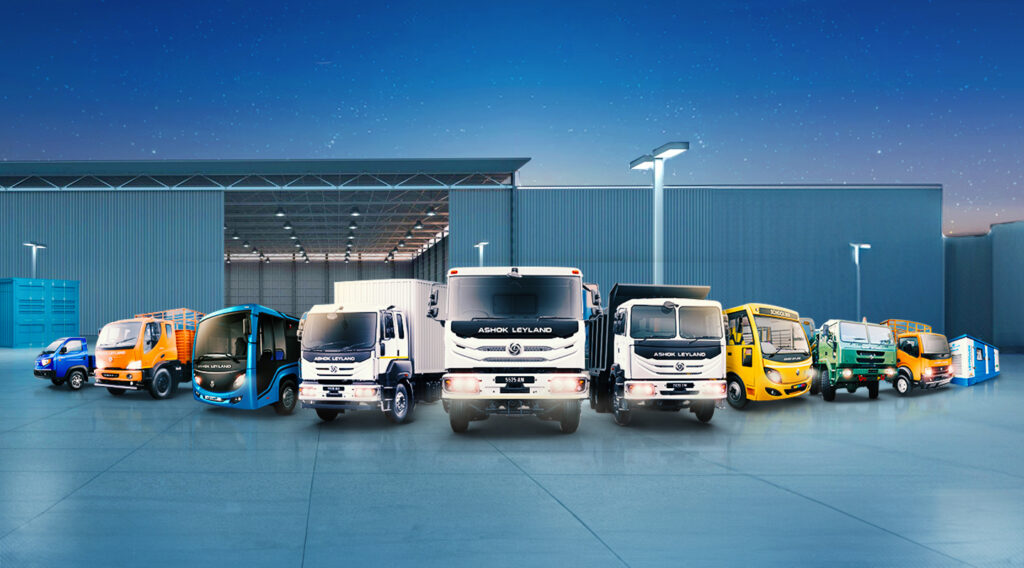
Ashok Leyland reported its best-ever annual financial performance in FY26 — revenues up 14% to ₹44,007 crore, operating profit before tax rising 22% to ₹5,163 crore, and a net cash surplus of nearly ₹6,000 crore — capping a year in which commercial vehicle volumes hit an all-time high, the EV business delivered a stunning turnaround, and the defence order book climbed to its highest level ever.
But the numbers, impressive as they are, tell only part of the story. What they point to is something larger: India’s second-biggest truck maker is no longer just in the business of selling trucks. It is building — methodically and with growing confidence — for a future that looks very different from its past.
Perfect Timing
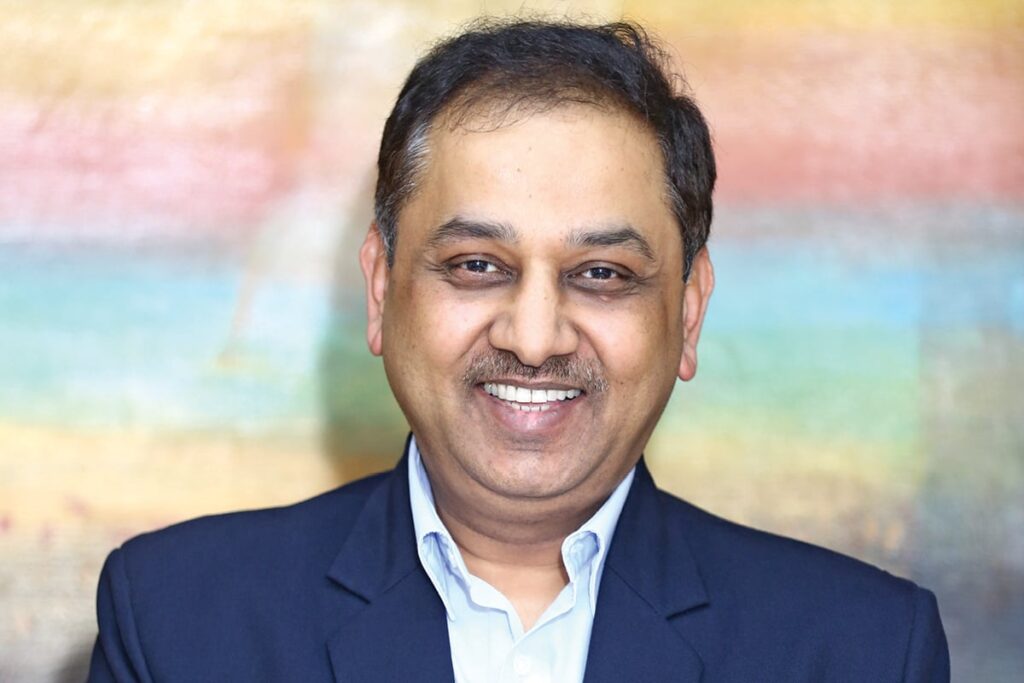
Mr. Shenu Agarwal, Managing Director and CEO, Ashok Leyland Limited
According to Mr. Shenu Agarwal, Managing Director and CEO, Ashok Leyland Limited, two things came together in the second half of last year to set the commercial vehicle industry on the growth path. When the government cut GST on trucks, prices fell by about 10% — and that was enough to convince many fleet operators who had been holding back to finally go ahead and buy. At the same time, India’s truck fleet had aged to its oldest point in two decades, with the average vehicle on the road now around 10 years old. Together, these two factors created a significant and sustained wave of replacement demand that showed no signs of fading quickly. “Ashok Leyland was well placed to ride that wave,” he said.
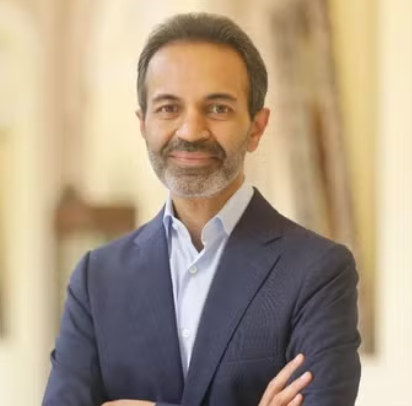
Mr. Dheeraj Hinduja, Chairman, Ashok Leyland Limited
Mr. Dheeraj Hinduja, Chairman, Ashok Leyland Limited said, “Our CV and export volumes were at an all-time high, reflecting the deep trust our customers place in us. The company delivered significant growth in Power Solutions, Aftermarket and Electric Mobility businesses. Our Defence order pipeline is at its all-time high, signifying ability to deliver superior growth in the coming years. Our entry into Indonesia gives further boost to our ambition in global markets. The record financial performance is backed by relentless innovation, unwavering focus on customer satisfaction, and ability to accelerate our ambition in global markets. We are well-positioned to sustain profitable growth and create long-term value.”
Resilience Tested
The question now is whether the momentum holds. Diesel prices have risen by about ₹7 a litre — manageable for now, but worth watching. A global oil price spike, driven by geopolitical tensions, could change the picture quickly. Mr. Agarwal said the company is candid about this uncertainty, but points to the two structural tailwinds — GST cuts and fleet aging — as forces strong enough to absorb modest disruptions. April has held up well. May is looking equally firm. He said, “While the markets are externally resilient, we have also made our company very resilient inside by lowering the breakeven now, even lower than 1,200 units of MHCV units per month,” a buffer that gives the company enough strength even if the market softens.
Electric Surge
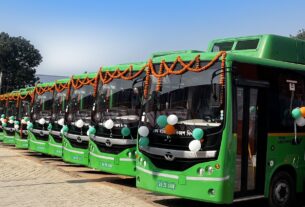
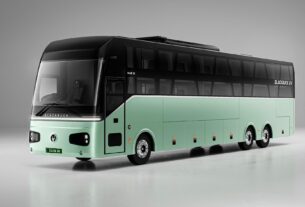
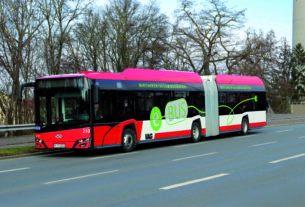
The most dramatic chapter in FY26 belonged not to trucks but to buses and light electric vehicles. Switch Mobility, Ashok Leyland’s EV subsidiary, saw e-bus volumes surge 238% to 1,530 units, driven by a wave of government tenders — nearly 15,000 electric buses put out to bid in recent months alone. E-LCV volumes rose 56% to 1,606 units. Switch Mobility’s revenue more than doubled to ₹1,807 crore, and the business swung from a loss of ₹62 crore the previous year to a profit of ₹104 crore. For a company that had been investing patiently in electric mobility for years, FY26 was the year the returns began arriving.
Even at the heavier end — 55-tonne vehicles — private customers are beginning to explore electric options, drawn by the improving economics of total cost of ownership as fuel prices rise. The shift is not yet dramatic, but the direction is unmistakable.
Smarter Trucks
Selling more trucks is one thing. Making truck ownership dramatically less stressful is another — and increasingly, Ashok Leyland sees technology as the key differentiator. “Every vehicle that we sell carries an i-Alert telematics device. A monitoring centre near Chennai watches the performance of trucks on the road in real time. When the system detects suboptimal driving — a gear shift pattern that is burning fuel, a maintenance issue building beneath the surface — the call centre reaches out to the driver directly,” he noted. The company began this journey seven to eight years ago. Today, it has a mature AI-powered platform that is visibly changing how fleet operators experience ownership and manage costs.
New Products
The product pipeline is also being refreshed. The Taurus Hippo tractor-trailer and Taurus Tipper, launched in January 2026, are designed around the company’s premiumisation strategy: more value, better reliability, stronger power and torque, and improved fuel efficiency. Early responses from customers who have seen or driven the vehicles have been encouraging. A bi-fuel variant — CNG with petrol as backup — has also been launched for markets in the National Capital Region, Gujarat, and Maharashtra where demand for such vehicles is strong. The full commercial impact of these launches is expected to flow through from the second quarter of FY27 onwards.
Going Global
Three years ago, Ashok Leyland exported around 8,000 vehicles. Last year, that number crossed 18,000 — a new record, up 18.5% year on year. The medium-term target is 25,000 units, which the company expects to reach within a couple of years. The Gulf, Africa, and South Asia remain the core international markets, which Mr. Agarwal calls “home markets” — not just selling vehicles, but establishing local factories, distribution networks, parts warehouses, and round-the-clock service teams. A new factory is coming up in Saudi Arabia. A partnership with Indonesia’s PT Pindad signals the next frontier: ASEAN, where the company is working to establish its distribution footprint. Europe and the UK remain further down the priority list for now, he said.
The Russia-Ukraine conflict and tensions in West Asia created some operational turbulence at the company’s Ras Al Khaimah factory, with labour and supply chain disruptions in March and April. But normalcy is returning, and the plant is expected to run at full capacity from June. Demand in the GCC region, meanwhile, has not weakened.
Battery Factory
To support its growing EV ambitions, Ashok Leyland is building a battery pack manufacturing plant in partnership with CALB, a Chinese battery technology company. The groundbreaking has already happened. Construction is expected to take 14 to 16 months, with production targeted to begin in the first or second quarter of FY28. When it comes online, it will give the company greater control over one of the most critical and cost-sensitive components in any electric vehicle.
Hydrogen Horizon
On hydrogen — the fuel that the industry keeps returning to as a long-haul solution — Ashok Leyland is measured but engaged. It already operates what it jokingly describes as the world’s largest hydrogen truck fleet, though the numbers are small. Hydrogen buses are running with NTPC, including in Leh, where extreme conditions provide a rigorous testing environment. The company sees hydrogen as a genuine long-term option for heavy trucks on long routes — but not yet. The infrastructure costs are too high, the technology too immature, and the economics too unfavourable compared to electric and other alternate fuels. For now, it is technology development and pilot programmes — building competence for a future that is still some years away, Mr. Agarwal explained.
Defence Bets
One more piece of the picture deserves attention. Ashok Leyland’s defence order book has reached its all-time high — upwards of ₹1,500 crore — and more orders are expected through FY27 and FY28. Defence, unlike the retail truck market, generates a visible and bankable order book. It is also a business where the company’s engineering capabilities and reputation for reliability translate directly into competitive advantage. The management sees defence as one of its fastest-growing business units in the years ahead — a quiet but significant pillar of what is becoming a genuinely diversified company.
Ashok Leyland entered FY27 with a net cash surplus of nearly ₹6,000 crore, a capex budget of ₹800 to ₹1,000 crore, three consecutive years of record performance behind it, and a global ranking that has climbed from around 26th to close to 20th among commercial vehicle makers worldwide.