

Blue Energy Motors (BEM) and Hindustan Petroleum Corporation Limited (HPCL) have started operating Bhiwandi’s first battery-swap station for electric heavy-duty trucks. It is the first milestone of the partnership the two companies announced in January 2026. Bhiwandi is a key logistics and warehousing hub in the Mumbai Metropolitan Region.
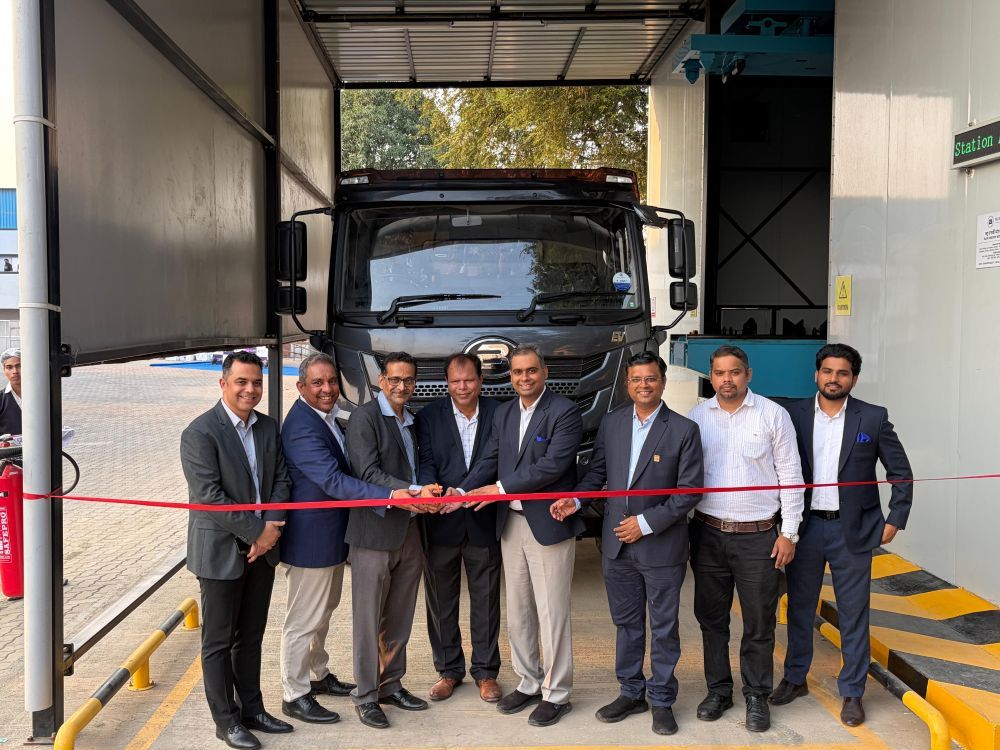
Rajiv Singh, CBO, Blue Energy Motors; Kushal Banarjee, Chief General Manager Strategy & BD, HPCL; and Jayesh Shelar, Chief Marketing Officer, Blue Energy Motors and their respective teams inaugurating the new battery-swapping station in Bhiwandi
The station lets BEM’s electric heavy-duty trucks swap batteries in less than five minutes, which the company says reduces charging downtime and helps fleets use their trucks more. It also extends the Mumbai–Pune Electric Freight Corridor, which BEM launched in October 2025.
The site also has an EV charging station open to the public, for electric two-wheelers, four-wheelers and commercial vehicles. BEM calls it a multi-segment EV energy hub within HPCL’s retail network.
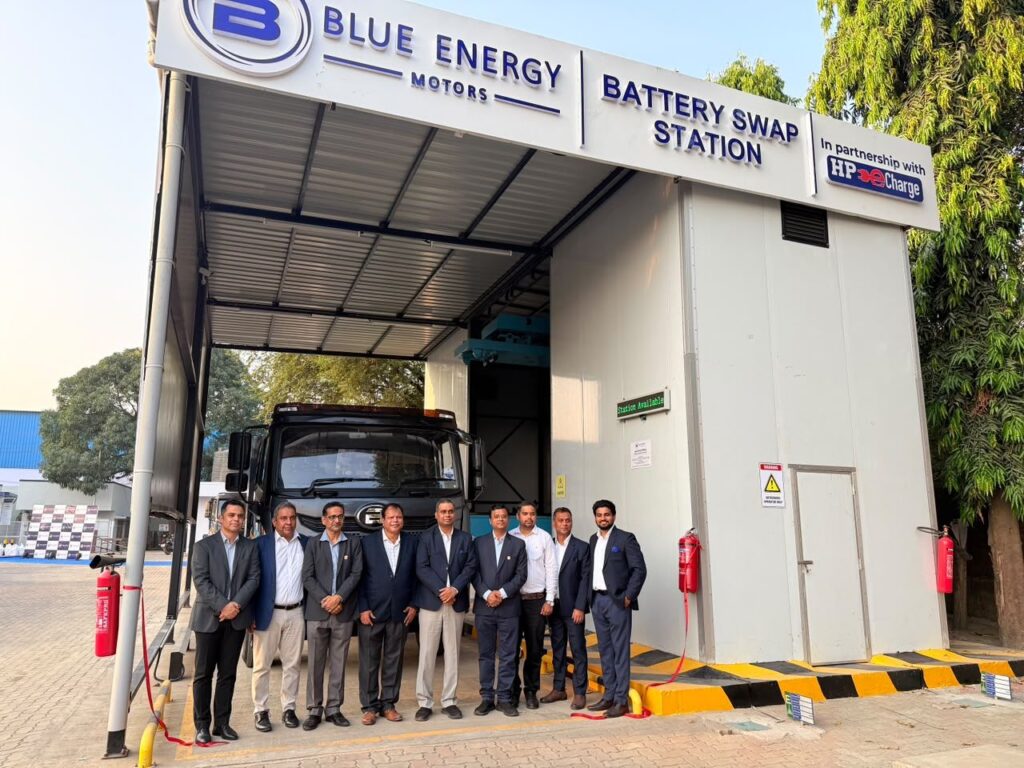
Bhiwandi’s first battery-swapping station for electric heavy-duty trucks by Blue Energy Motors in partnership with HPCL
“Our focus at Blue Energy Motors is on making electric freight a practical and scalable reality in India,” said Mr. Anand Mimani, CEO, EV & New Energy Business, Blue Energy Motors. “Bhiwandi, with its strong freight and logistics activity, is an important market for us. This first facility is a meaningful step forward, and we look forward to expanding our network of battery-swapping and charging facilities across key markets, supporting electric trucking and serving the wider EV ecosystem.”
BEM says it has over 1,400 green heavy-duty trucks, electric and LNG-powered, running on key freight routes in India. The company says they have covered more than 150 million green kilometres, reducing CO₂ emissions by more than 44,000 tonnes, which it equates to the carbon absorbed by about 1.8 million trees.


