
The Centre of Excellence in Advanced Automotive Research (CAAR), is also working on what it calls a ‘vehicle passport.’ The idea is similar to the battery passport that Europe has made mandatory. It would track key parts, including rubber belts, for instance, from where the raw material comes from to the end of the part’s life.
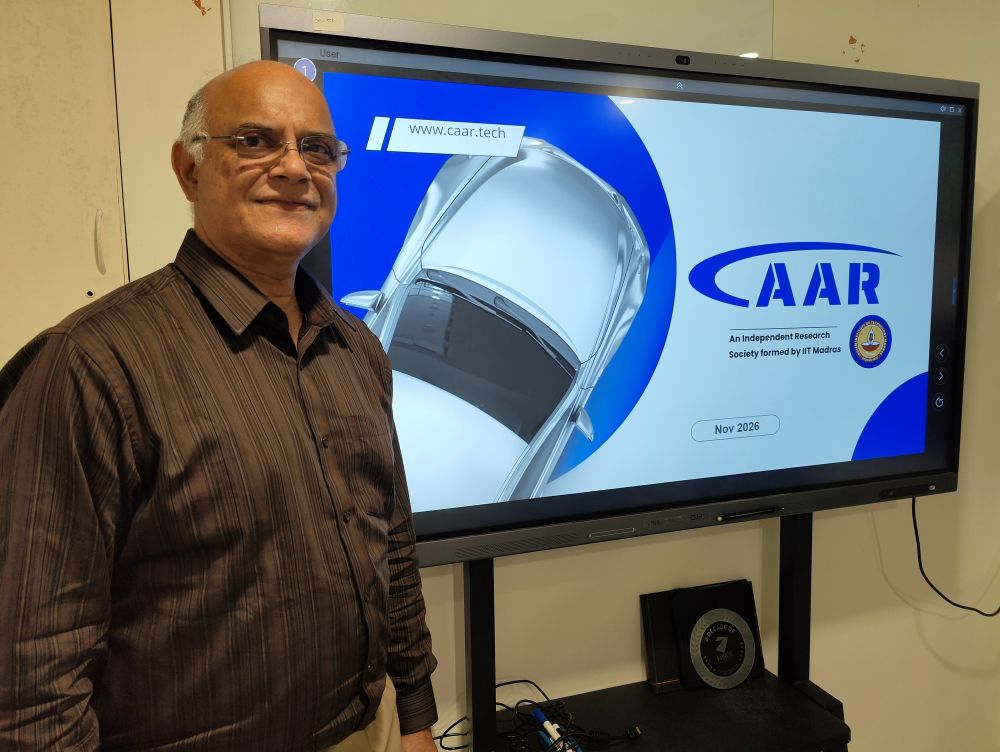
Speaking to this publication, Dr. Anand Lakshmanan, , Senior Project Advisor – Software Defined Vehicles & Advanced Automotive Technologies, CAAR, said, the vehicle passport will also help curb fake parts from reaching customers. But it works only if the whole supply chain takes part, not just the carmaker, he said.
Some buyers knowingly choose cheaper grey-market parts. Today, the risk from such parts is mostly mechanical. In the future, it could also be a cyber risk. He compared the fix to a printer that warns you when a non-original cartridge is put in. Vehicles need the same kind of check, he reiterated.
CAAR is bringing India’s carmakers and parts suppliers together to build a shared software base for the next generation of vehicles. A couple of weeks ago, it held a workshop at IIT Madras that drew more than 30 companies, including vehicle makers and their Tier 1 and Tier 2 suppliers. The aim is to form a group of companies that can jointly develop common platforms for software-defined vehicles (SDVs).
Dr. Lakshmanan, said the automotive industry cannot afford to wait. India is now the world’s third-largest vehicle market, but staying there and moving up will need more than making and selling vehicles. “We need to be in a place where we are able to build the new technologies also,” he pointed out.
According to Dr. Lakshmanan, the first hurdle is that people do not agree on what a software-defined vehicle (SDV) actually is. Most people think of the touchscreen and infotainment system. That, he said, is “the least of it.” Today, software runs almost every part of a vehicle. The more of the vehicle that runs on software, the easier it becomes to add new features, fix problems and send security updates without changing any hardware. Even people who bought their vehicless years ago could get new features this way.
Too Many Silos
The problem is how the industry is set up. Vehicle makers mostly put together parts made by suppliers. Tier 1 and Tier 2 companies do much of the real development, and each one builds its own controllers and software. These pieces are often made without thinking about how they will work together.
Dr. Lakshmanan warned that this will cause trouble sooner or later. His answer is a common base that every company can use. The lower layers of software do the same basic jobs in every vehicle, so there is no point in each company building its own version. If those layers are shared, companies can spend their money on the features that make their vehicles stand out. He described it as three layers. The bottom layer is common to all vehicles. The middle layer changes by segment, since a truck, a budget car and a luxury car have different needs. The top layer, which he called the application layer, is where each company builds its own features.
CAAR already works with four or five passenger vehicle makers, about half a dozen two-wheeler companies, including some start-ups, and three or four large Tier 1 suppliers. It is also starting to talk to companies that make off-road vehicles. These companies have not yet signed up formally, he said, but many have shown real interest in joining the group.
Ready for Quantum Computers
Cybersecurity is another big focus. Today’s encryption relies on math that future quantum computers may be able to crack. Quantum computing, according to him, need not ruin current security work, but the industry has to prepare for it. CAAR is already building post-quantum cryptography into its designs, drawing on research at IIT Madras. It also uses blockchain to store identifiers, so any hacking attempt can be traced quickly.
Still, there is no such thing as perfect security. “It is always a moving goalpost,” he said. Systems also have to stay affordable. A budget car may need a simpler setup that blocks outside access, while a premium car can have more features and stronger protection, he opined.
Security Built In, Like a Phone
One idea still in the early stages is a shared security framework. Every part of a vehicle would use it instead of building its own security, much like phone apps rely on the phone’s built-in protection. For this to work, all communication in the vehicle must pass through one central point. That means moving to a central computer. This computer could also run an AI engine that processes data inside the vehicle and sends only what is needed to the cloud. This would make the vehicle respond faster and keep data costs down for owners, who may otherwise end up paying monthly fees for connectivity.
Spend a Little on the Future
Dr. Lakshmanan said Indian companies do not need to stop buying foreign technology. But as long as they depend on it, they will stay “two steps behind the leader. If a company spends ₹100 on buying technology, it should put ₹5 or ₹10 into building its own. The returns will not come in three months, but in three years India’s reliance on outside technology could start to fall,” he cautioned.