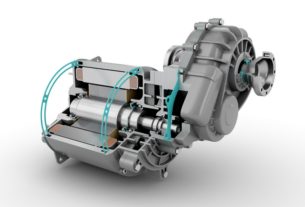

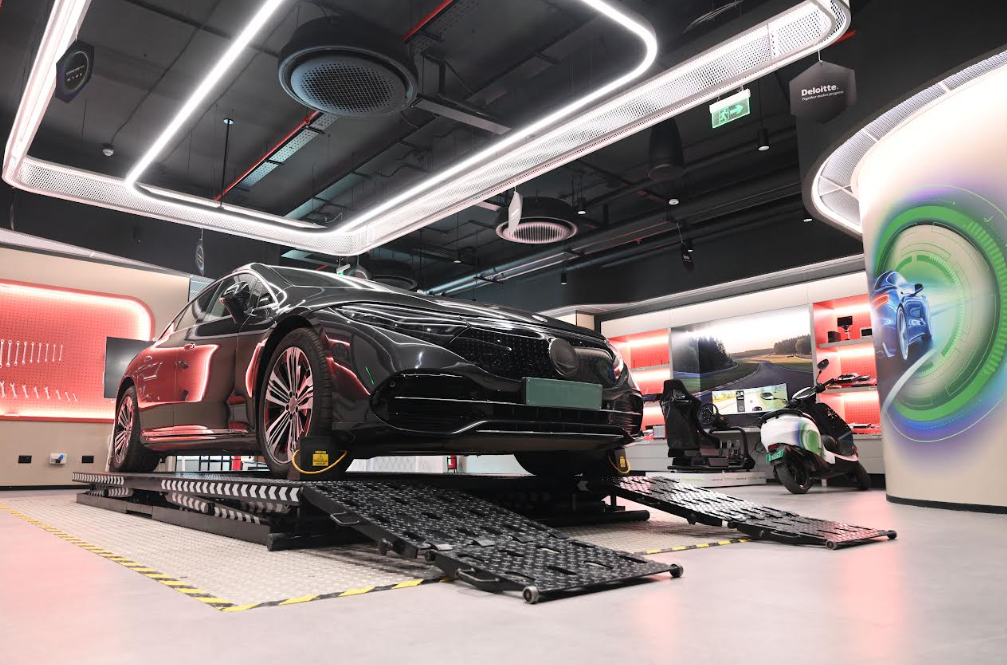
‘ConnectSafe’ acts as a cyber crash-test facility for the digital automotive era. By testing and strengthening vehicle cybersecurity frameworks, it helps companies build customer confidence, protect brand value and stay competitive in an increasingly connected mobility ecosystem.
As vehicles become increasingly connected and software-driven, cybersecurity is no longer a back-end technical concern. It is becoming a critical element that determines safety, reliability and even brand trust. From advanced driver assistance systems (ADAS) to over-the-air (OTAs) updates and cloud-connected services, modern vehicles now operate as complex digital platforms on wheels. This shift is transforming how the automotive industry approaches cybersecurity.
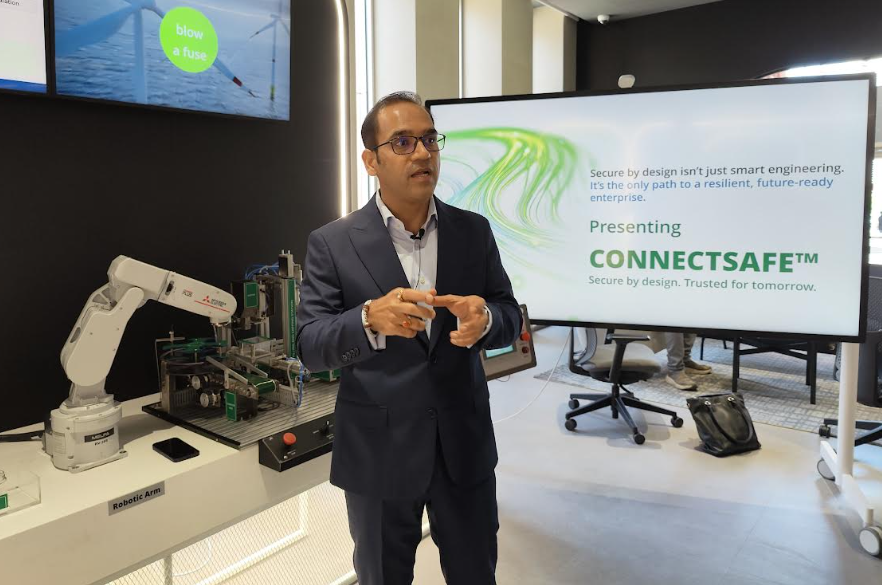
Recognising this evolution, Deloitte has built ‘ConnectSafe’ – an integrated cybersecurity and testing ecosystem that supports automakers and other industries through the entire lifecycle of connected products. Instead of treating security as a final checkpoint, the company is embedding it into every stage of development — from the design table to vehicles already running on the road.
What makes Deloitte’s approach unique is the way it brings multiple sectors together under one platform. Automotive systems today share technological foundations with other industries such as manufacturing, and energy infrastructure. Rather than looking at cybersecurity in isolated silos, Deloitte’s framework enables organisations to test and secure connected systems across these sectors within a unified environment.
Security by Design
The process begins long before a vehicle is assembled. At the earliest design stage, Deloitte conducts threat modelling to identify potential vulnerabilities across components, interfaces and software layers. By anticipating how a system could be attacked, engineers can build security directly into the architecture, Mr. Gaurav Shukla, Partner and Leader – Cyber, Deloitte South Asia, said, in an exclusive interview to this publication.
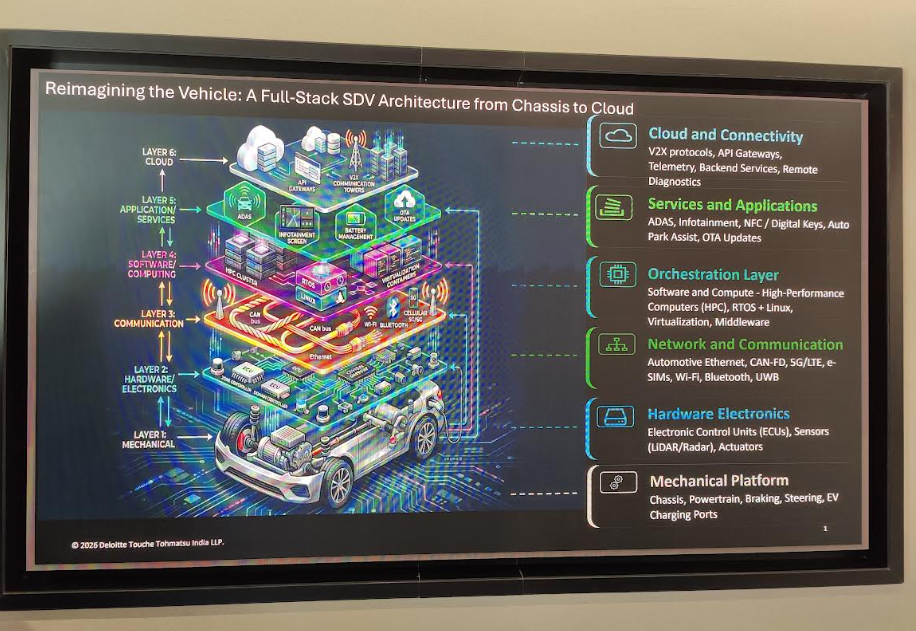
This early-stage approach significantly reduces the cost and complexity of fixing vulnerabilities later. In cybersecurity, there is a commonly cited principle — “1 to 10 to 1000.” A flaw fixed during design might cost one unit of effort. Fixing it during integration could cost ten times more, while resolving it after deployment can become a thousand times more expensive.vBy embedding “security by design,” Deloitte helps automakers prevent issues rather than reacting to them, he explained.
Testing the Digital Vehicle
Once systems move into development, Deloitte’s testing framework evaluates security across multiple levels. The first step is unit testing, where individual components such as electronic control units (ECUs) or telematics control units (TCUs) are assessed.
The next stage is integration testing, where these components are tested together within software-defined vehicle platforms. At this level, engineers examine how systems interact and whether new vulnerabilities emerge when multiple technologies communicate with each other.
Finally, full vehicle testing takes place once the vehicle is assembled. Before reaching dealerships, vehicles undergo rigorous cybersecurity validation to ensure that digital systems remain secure even under simulated attack scenarios.
This layered approach reflects the growing complexity of modern vehicles, where hundreds of software modules interact across multiple networks.
Monitoring Beyond the Factory
Cybersecurity does not end once a vehicle leaves the production line. In fact, it becomes even more important once vehicles are deployed in real-world environments. To address this challenge, Deloitte is helping manufacturers establish Vehicle Security Operations Centers (VSOCs). These centres continuously monitor the health and security of vehicles after they are sold.
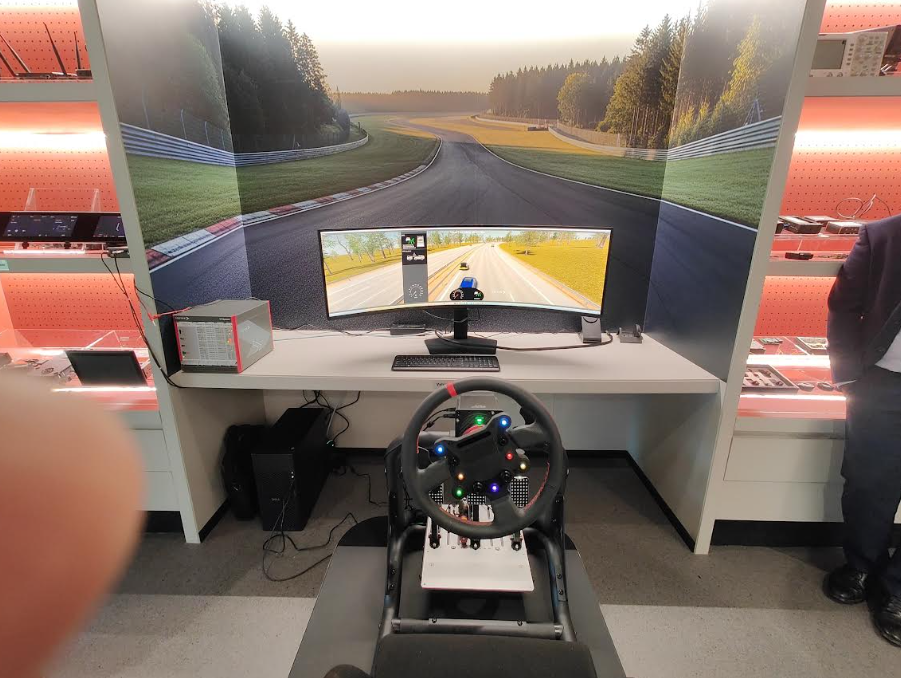
Through remote data analysis, VSOCs can detect anomalies such as malfunctioning ECUs, unexpected software behaviour or potential cyber intrusions. Once identified, manufacturers can respond quickly by issuing over-the-air updates or security patches. This continuous monitoring model transforms cybersecurity from a one-time testing exercise into an ongoing protection system, he noted.
Bridging IT, OT and Mobility
Another key element of Deloitte’s strategy is the convergence of cybersecurity across different technology domains. Traditionally, organisations managed information technology (IT) and operational technology (OT) security separately. However, in modern connected ecosystems, these boundaries are disappearing. Vehicles now communicate with cloud platforms, manufacturing systems and digital infrastructure.
To address this complexity, the company is working towards integrated security operations that combine IT, OT and automotive monitoring within unified cyber intelligence centres. These centres operate round-the-clock, analysing alerts and coordinating responses across multiple digital environments. The result is a more holistic view of cybersecurity, where threats are detected and addressed across interconnected systems.
Beyond Compliance
For many organisations, cybersecurity began as a regulatory requirement. Automakers today must comply with global standards such as ISO 21434, SAE J3061 and cybersecurity management system frameworks mandated by international regulations. Deloitte supports companies in navigating these regulatory requirements while also ensuring data privacy and sovereignty compliance across different regions, he said.
However, the company believes cybersecurity should be viewed as more than just a compliance exercise. Strong security practices can enhance customer trust, protect brand reputation and create competitive advantage in an increasingly digital automotive market. In a world where vehicles are becoming intelligent, connected machines, security can become a key differentiator.
Preparing for the Autonomous Future
Mr. Shukla said, as technologies such as advanced driver assistance systems and autonomous driving evolve, the cybersecurity landscape will continue to grow more complex. Vehicles will increasingly rely on real-time data, artificial intelligence and cloud connectivity. In such an environment, reactive security models will no longer be sufficient. Cybersecurity must become proactive, embedded and continuously evolving, he observed.
Through its integrated testing, threat modelling and monitoring ecosystem, Deloitte is positioning itself as a long-term cybersecurity partner for the automotive industry and beyond. By combining expertise across software engineering, operational technology and digital infrastructure, the company aims to help industries build secure systems that can withstand the risks of an increasingly connected world.
As vehicles transition into software-defined platforms, cybersecurity will become as fundamental as engineering itself. And in that transformation, the ability to test, monitor and secure digital systems throughout their lifecycle may well determine the future of safe mobility, Mr. Shukla concluded.