

By T. Murrali
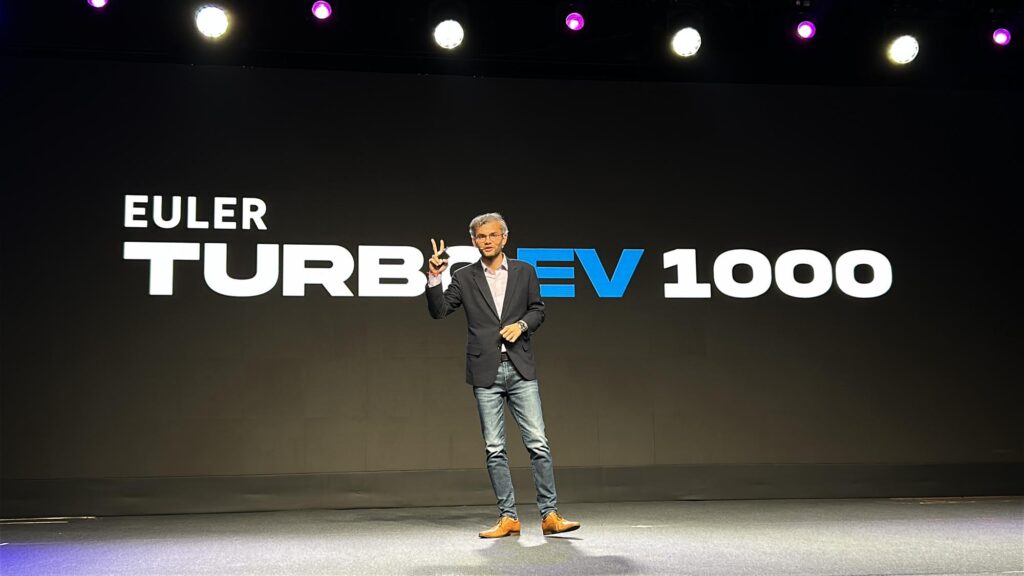
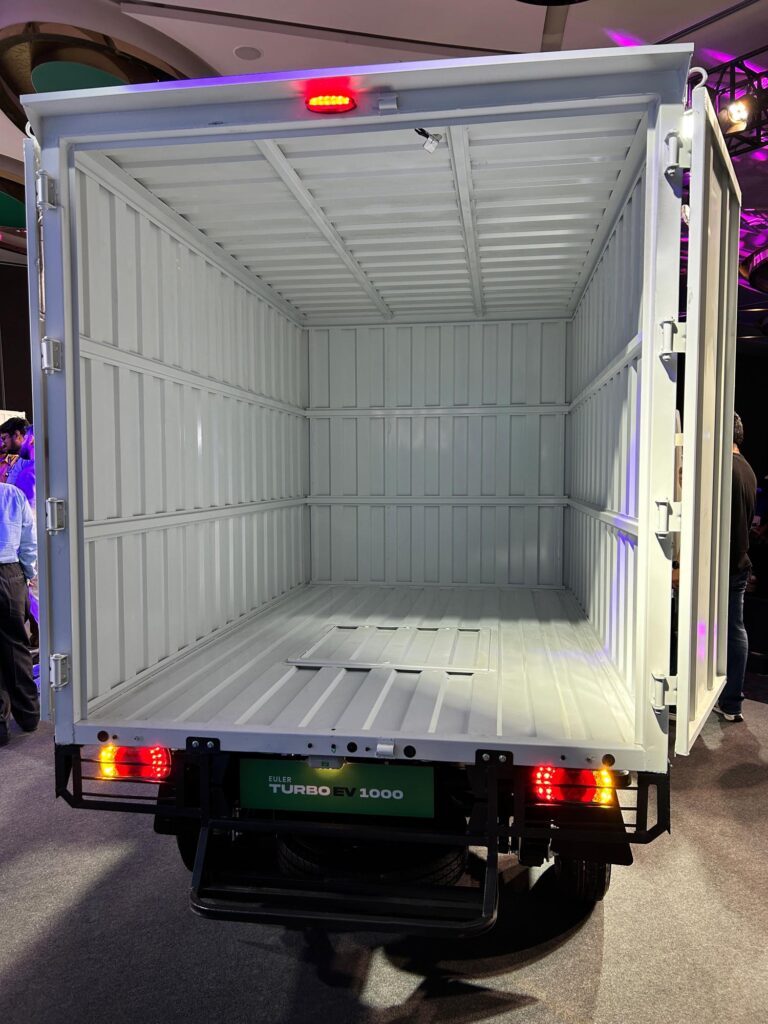
Staying true to its belief that electric vehicles must be built for India and scaled for the future, Euler Motors has launched the Turbo EV 1000, a 1-tonne four-wheeler electric commercial vehicle (eCV) priced from ₹5.99 lakh.
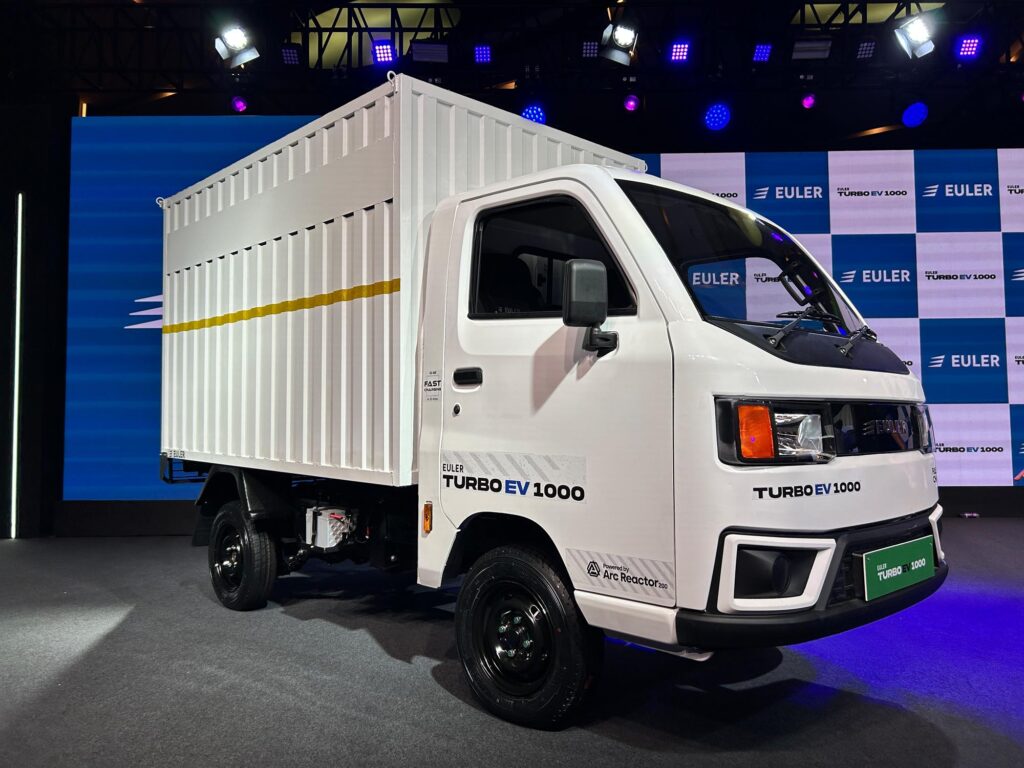
This is the company’s third product and second four-wheeler eCV, available in three variants—CITY, FAST CHARGE, and MAXX—with financing options starting at ₹10,000 per month with a down payment of ₹49,999. Designed to carry more payload at the lowest total cost of ownership of ₹1/km, the Turbo EV 1000 promises annual savings of ₹1.15 lakh over diesel rivals. What sets it apart is its blend of performance and affordability: a real-world range of 140–170 km and 140 Nm torque.
By combining nine segment-first innovations with safety, reliability, and low running costs, the vehicle doesn’t just fill a gap in India’s 4W CV segment—it aims to accelerate EV adoption in a market where penetration still hovers at just 1.5%, said Mr. Saurav Kumar, Founder & CEO of Euler Motors.
Why Euler Motors entered the 1-tonne EV segment
At dawn, India’s cities come alive. A three-wheeler drops medicines at a clinic, a small truck unloads vegetables, and another van delivers last night’s online orders. This restless web of drivers keeps India’s logistics moving. They work long hours to support their families, yet rising fuel bills and steep maintenance costs mean many barely break even. Worse, their vehicles contribute nearly a third of urban air pollution. This scenario propelled the entry of electric vehicles into the entry-level, last-mile connectivity segment. While three-wheelers have already embraced electrification significantly, four-wheel small commercial vehicles are only beginning to make the shift.
Euler Motors was born in 2018 to meet that moment, Mr. Kumar said adding that the mission was clear: build EVs that are cleaner and more profitable for the people who drive them. Coming from outside the traditional auto world, he questioned the basics—what hurts a driver’s day, where fleets lose money, and how to design vehicles for Indian roads, loads, and climates without importing cost or complexity.
That thinking led to take bold initiatives, he said. In 2021, Euler introduced liquid-cooled batteries in 3W cargo EVs, boosting durability in extreme conditions. It also brought advanced features like ADAS and night-vision to 4W eCVs—tech rarely seen in workhorse trucks. Customers noticed, returned with feedback, and then with repeat orders, he said.
From one base in Delhi-NCR, the company has now expanded to 60 cities, deployed over 11,000 vehicles, and built a loyal community of 6,500–7,000 customers. Together, those vehicles have logged more than 200 million kilometres, saved 70 lakh litres of diesel, cut 17,000 tonnes of CO₂, and delivered the climate equivalent of planting eight lakh trees. Still, “there is an urgent need for action towards sustainability, or else we will risk questioning by future generations. However, it is not possible to expect scale adoption without responding to practical everyday challenges. Euler Turbo EV 1000 responds to this dual need of a long-term vision, while keeping short term needs in mind,” Mr. Kumar said adding that for a young brand, that’s meaningful impact—and a strong foundation for the Turbo EV 1000.
India’s light cargo market is massive, at about 6.25 lakh vehicles a year—1.25 lakh three-wheelers and the rest four-wheelers. While nearly a quarter of 3Ws have gone electric, 4Ws remain stuck at just 1–1.5%. The reason is clear: ICE trucks deliver performance but bleed owners with high fuel and maintenance costs, while early EVs ease running costs but fall short on range, torque, and gradeability.
The dual lens—environment & economics
“When Euler studied this gap, two clusters stood out—performance without affordability, or savings without strength. What the market needed was an ‘and’ product: a truck that combined both,” he said. For Mr. Kumar, the challenge was personal too. As a father of a six-month old baby boy, he often thought of what kind of air his son would breathe 20 years from now. That became his resolve—to build a vehicle that delivered on both performance and cost, while helping clean the skies for the next generation.
Euler calls the Turbo EV 1000 its ‘and’ product—a mini-truck that doesn’t force a choice between power and price. Built for India’s 1-tonne cargo segment, it aims to be both a tough workhorse on the road and a smart winner on the balance sheet. Claimed as the world’s first in its class to offer this mix of performance and affordability, the vehicle, according to him, stands on four clear pillars: performance, efficiency, design, and deep vertical integration.
Performance: Built tough for Indian roads
A truck’s strength begins with its frame, and the Turbo EV 1000 debuts a box-section chassis—far sturdier than standard C-sections—to withstand India’s punishing roads. Rigid axles add stability, while customers can choose R12 or R13 tyres based on cargo needs. A roll-over device keeps tall loads steady, and parabolic leaf springs ensure easy servicing anywhere in the country. Drivers benefit from a high-ratio mechanical steering that cuts effort, or electric power steering for fatigue-free shifts. Braking is equally advanced: an X-circuit system with load-sensing valves keeps control even if one brake line fails, while massive 230 mm discs, the largest in its class, shorten stopping distances.
Efficiency: saving money, mile by mile
Efficiency here is more than big batteries—it’s a smart, integrated powertrain. Options span 73V, 96V, and 320V packs with liquid cooling for fast charging. Flexible charging modes—from slow overnight AC to a 15-minute CCS top-up for 50 extra kilometres—keep trucks on the move. Three drive modes make the truck adaptable: ‘Range’ for distance, ‘Thunder’ for quick bursts, and ‘Rhino’ for hill climbs. With torque and gradeability better than diesel rivals, the truck feels lively even when fully loaded, he pointed out.
Anxiety on battery replacement is eased by modular design. Instead of replacing the entire pack, owners can swap just the worn modules—cutting costs by 60–70%. Real-world range claims are conservative to protect customer trust, and Euler’s track record shows batteries lasting well beyond EMI cycles, often for seven years or more. For small operators, this means fewer surprises and more peace of mind, he explained.
Design: style meets substance
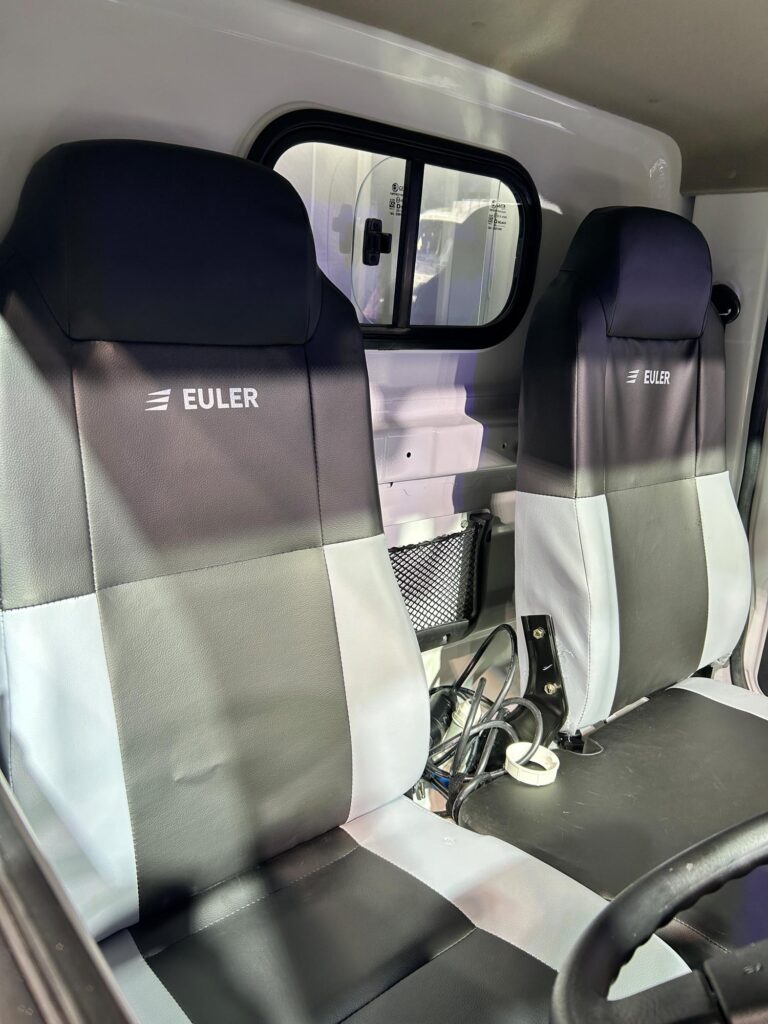
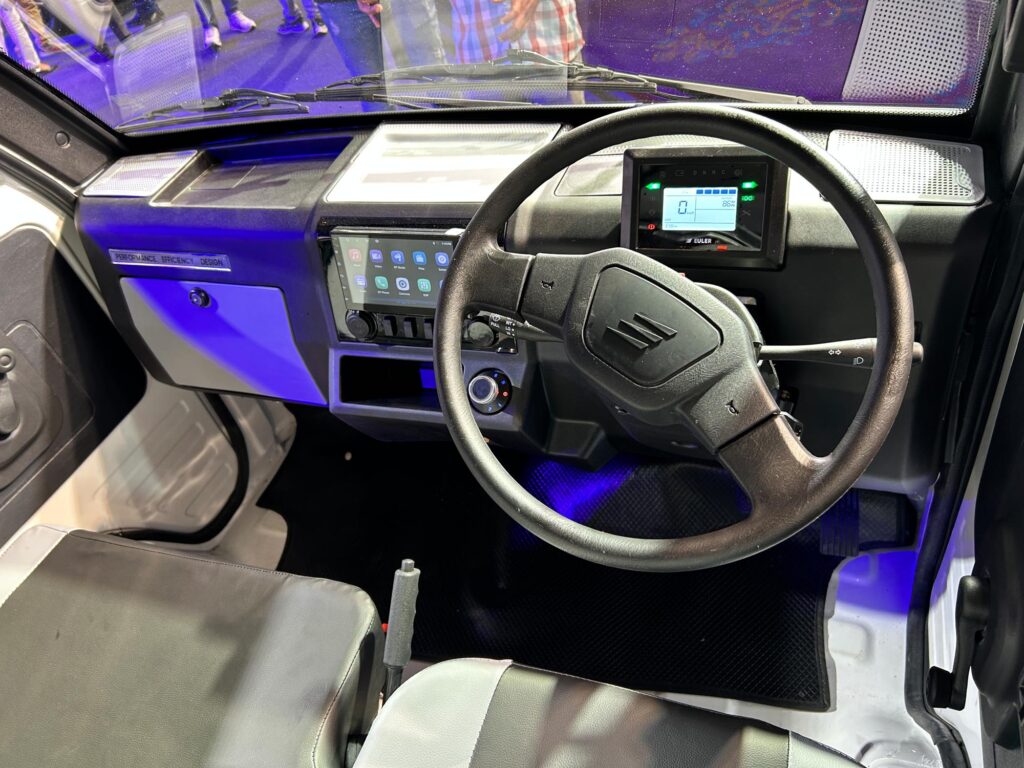
The Turbo EV 1000 wears a confident, muscular look while keeping the cabin simple and driver-friendly. Seats are comfortable and allow for quick rests, storage is ample, and the walk-through layout makes it easy to grab essentials. A 7-inch infotainment screen supports maps and messages, while body options range from flatbeds to refrigerated units. Even small touches—like higher brake lights for tall loads—show attention to real-world safety.
Vertical integration: control that counts
Euler builds its core electronics in-house. The advanced Battery Management System extends life and range, while the 4th-gen Vehicle Control Unit runs everything from drive logic to OTA updates. Telematics let fleets monitor vehicles in real time, track energy use, and even lock down stolen trucks remotely. This digital backbone doesn’t just add features—it boosts uptime, trims costs, and builds long-term profitability.
Built for India’s roads and realities
The demand for cleaner fleets has never been in doubt. Big brands, logistics firms, and city authorities all want them. The real hurdle was economics and trust—drivers and fleet owners would only switch when the math made sense and the truck felt as good as the diesel machines they rely on. That’s the friction Euler set out to remove with the Turbo EV 1000.
But this truck is more than a single product. Euler wants India to lead, not just follow, in the global EV race. Instead of a niche eco-alternative, the Turbo EV 1000 is pitched as a tough, everyday work tool—global in class, Indian in spirit. Every design choice, from its stiff chassis and braking logic to steering ease and battery cooling, was made to protect uptime, safety, and earnings, Mr. Kumar explained.
And because it’s connected and OTA-ready, this truck is built to get better with time. Fleets can adapt it to tomorrow’s rules and routes without swapping hardware—a big advantage in a market where policies, taxes, and charging networks are always in flux.
At its core, the message is simple. India’s logistics depends on countless short trips made by people who deserve machines that pay them back, kilometre after kilometre. The Turbo EV 1000 promises both power and payback, not one or the other. If fleets embrace it, the slow e4W cargo adoption curve could finally bend upward—and the morning buzz of Indian streets might soon come with cleaner air.