
As electric vehicles disrupt decades-old aftermarket revenue streams like oil changes and routine servicing, global automotive solutions provider Würth Group scripts its strategy to bring back previously outsourced services, such as smart repair, glass repair, and AC servicing, back into workshops, while betting heavily on technologies that work regardless of what powers the vehicle.
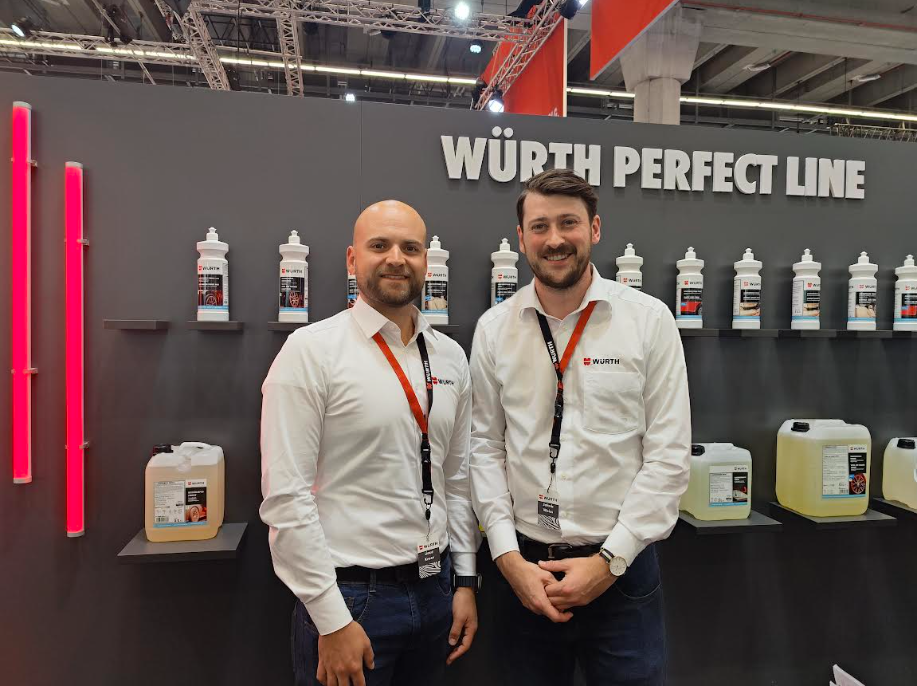
Speaking to this publication at the recently concluded Automechanika Frankfurt 2026, Mr. Linus Kress, Market Manager – International Divisions Auto & Cargo, and Mr. Jakob Weiss, Business Development Manager – International Divisions Auto & Cargo of Würth Group, discussed about the key drivers for the company’s growth.
Operating across 80 countries, they said that the company sees several major trends reshaping the global aftermarket including the rise of electric vehicles, growing reliance on data and diagnostics (with artificial intelligence increasingly part of that picture), a shortage of skilled technicians especially in Western markets, and accelerating consolidation, as independent and OE-affiliated workshops increasingly absorb smaller, family-run repair shops.
While Würth operates with a highly decentralised structure, giving each country its own product management, warehousing, and HR functions, the company has invested heavily over the past five to ten years in regional consolidation. In Latin America, for example, a single regional hub now coordinates logistics and purchasing across 12 subsidiaries, giving the company greater market presence, purchasing power, and a more unified customer experience across the region, an approach it plans to deepen further in the coming years.
On the growing shift towards independent workshops, the company officials said this hasn’t fundamentally changed its own approach, since its core focus has always been on solving problems for mechanics and workshops, regardless of who owns them. What has changed, however, is the customer mix itself. As new car sales growth slows, more used cars remain on the road longer, pushing owners towards independent workshops rather than OE service centres. In response, Würth is focused on enabling independent workshops to take on work that was traditionally handled only by OEMs, they said.
With real estate costs rising globally, workshops are increasingly looking to shrink their footprint while boosting productivity, a demand, they indicated, has been central to its strategy for years. Rather than simply selling individual parts and consumables, the company now focuses on complete efficiency-driven solutions, such as its fully automatic stone chip repair kit, which cuts a traditionally manual, time-consuming task by 40%, freeing up technicians for additional work like oil changes or tyre replacements.
Looking ahead, the company’s focus will remain on “drive-type independent” solutions, those unrelated to whether a car runs on petrol or electricity, since these represent durable, long-term business opportunities. Examples include AC servicing (directly linked to EV battery thermal management), wheel alignment, and bodywork and car care services, sectors expected to remain relevant regardless of powertrain shifts.
On artificial intelligence and emerging technologies, the spokespersons said the company takes a deliberately cautious approach, preferring to observe trends alongside its customers before committing fully. One clear exception is vehicle data and repair manual access, an area the company identified early as critical, particularly for independent workshops, and has already built dedicated systems around. To serve highly varied customer segments, from workshops handling older vehicles to those working on advanced, sensor-laden cars, Würth relies on specialisation, employing dedicated experts for areas like digitalisation and calibration diagnostics, while a broader sales force handles more traditional workshop needs. The company also runs its own training academy, helping customers and technicians build skills directly relevant to newer technologies like AC systems and bodywork repair.
On India specifically, they described the market as critically important and highly innovative, crediting its Indian teams for consistently spotting trends early, including piloting the region’s first electric vehicle approach about a decade ago. Despite India’s rapid technological advancement, one thing remains constant – customers strongly value direct, personal contact from sales representatives, something no amount of AI or digital tooling can fully replace, especially when a workshop technician urgently needs a missing part or quick support.
The officials also highlighted the company’s advanced car care and EV-specific infrastructure in India, including insulated tools and fire safety equipment, calling India one of the boldest and fastest-adapting markets in the region when it comes to trying and adopting new technologies and business ideas.