
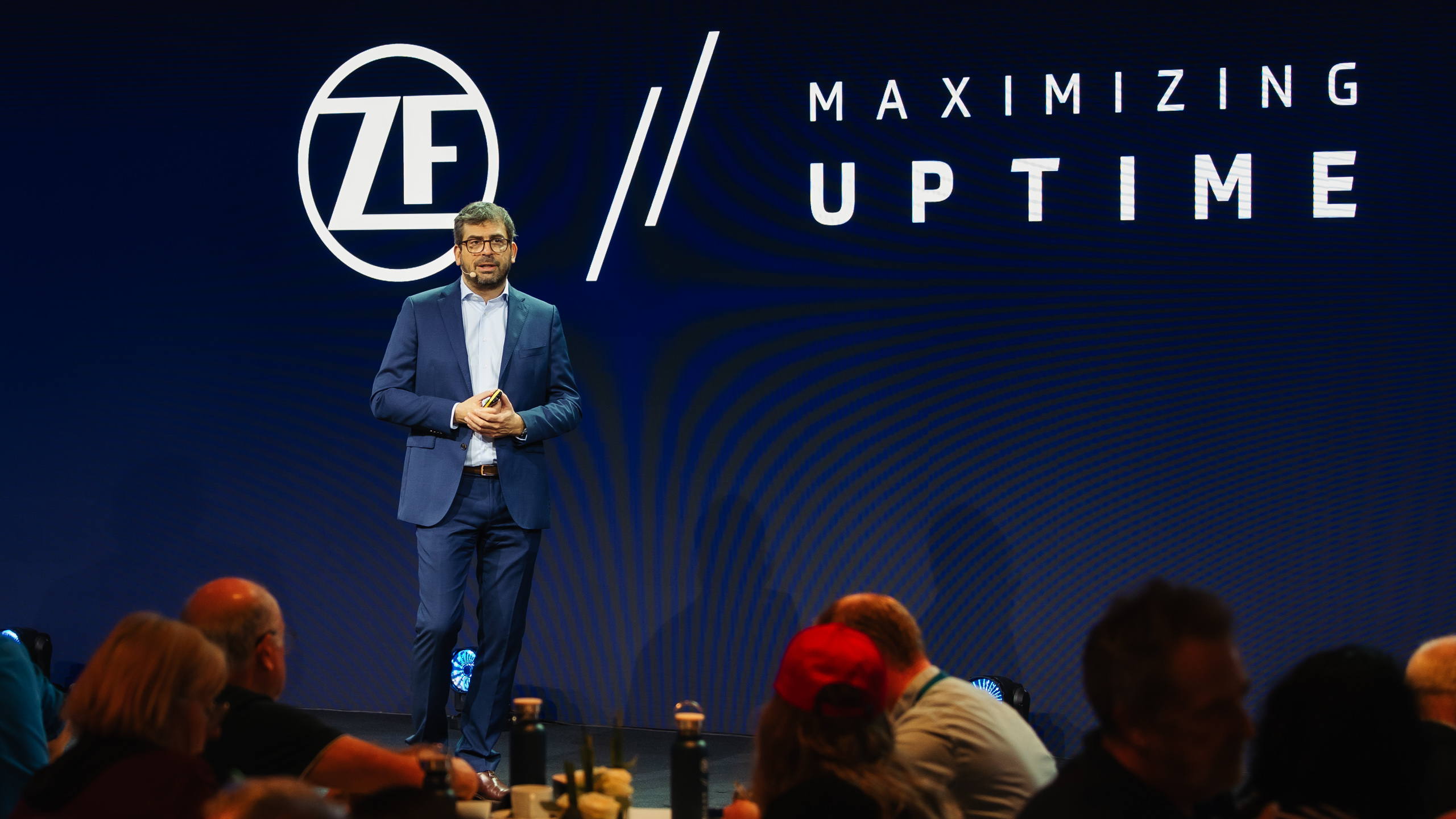
The automotive aftermarket’s much-discussed transformation is no longer a future promise, it’s happening now, Mr. Philippe Colpron, Global Head AM ZF Group, has said. Addressing a media briefing at the recently concluded Automechanika Frankfurt, he pointed out to over 58 million electrified vehicles already on the road worldwide and a fundamental shift in how software governs even basic mechanical repairs.
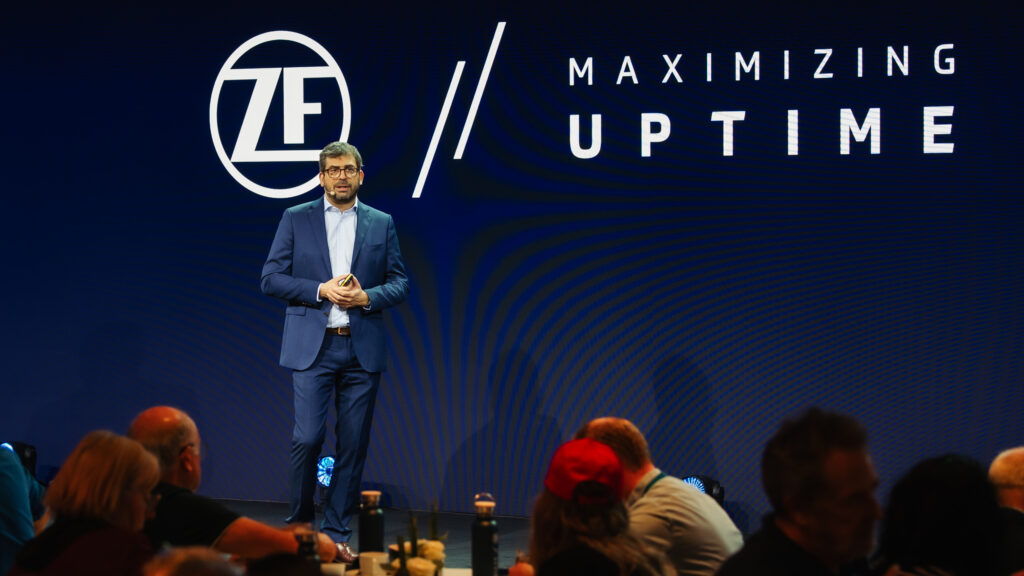
According to him, several forces are converging simultaneously to reshape the industry. Beyond electrification, software-defined vehicles are changing what a mechanic can even do without advanced diagnostic tools, introducing new complexities like cybersecurity management. At the same time, the global vehicle fleet is evolving in two opposite directions: older vehicles are staying on the road longer, even as a fast wave of new models, architectures, and manufacturers, particularly Chinese OEMs, whose exports have doubled in the past year, enter the market. This creates growing complexity for distributors and workshops alike, more parts to stock, more cross-referencing, and greater need for technician training and flexible, pay-per-use diagnostic tools. Broader societal shifts, including sustainability priorities, the arrival of Euro 7 emissions standards in Europe, and the accelerating role of AI across the entire aftermarket ecosystem, are adding further layers of change, he elaborated.
Despite this pace of disruption, Mr. Colpron argued that the aftermarket has little reason to worry, since mobility itself remains a permanent societal need, and a strong independent aftermarket will always be essential to keep it running. The company’s strategy rests on three pillars: building trust with customers, expanding and strengthening its product portfolio, and better connecting the aftermarket ecosystem, he said.
On staying locally rooted while globally connected, ZF highlighted its continued investment in regional expansion, having opened 16 new subsidiaries since the last Automechanika, including two new ones this year in Almaty, Kazakhstan, and Morocco. Training remains a major focus too, with over 5,000 training sessions delivered and more than 410,000 mechanics trained through the ZF Pro Academy. To support customers further, ZF operates 23 customer competence centres worldwide, handling over 600,000 calls annually with a satisfaction and availability rate exceeding 95%.
Product Availability
On product availability, ZF has consolidated its various acquired brands into a single online catalogue featuring over 920,000 part-SKUs, representing more than 95% of its independent aftermarket sales, a move designed to simplify sourcing for distributors and workshops alike.
ZF’s core technical strengths remain centred on three areas: chassis systems (braking, steering, and suspension, an area where the company offers all three, or what it calls “six degrees of movement”), powertrain solutions (spanning combustion, hybrid, and fully electric drivetrains), and software and diagnostic capabilities. These strengths are carried across ZF’s portfolio of century-old heritage brands, including Sachs, Lemförder, Wabco, and TRW, now unified under new packaging explicitly branding them as ZF products. This deliberate move is to build stronger brand recognition among workshops. This combined range already covers around 30% of repairs in passenger cars and commercial vehicles, with the company adding 12,000 new part numbers annually on average, and pushing that figure to 20,000 this year, he highlighted.
On the rise of Chinese vehicle exports, he said it’s well positioned to serve this shift given its strong existing presence in China, already covering 60% of key exported commercial vehicle applications, and targeting coverage of Europe’s top 10 vehicle brands by end of 2027, requiring roughly 200 more SKUs to complete that coverage.
On electrification specifically, Mr. Colpron said it already covers about 92% of Europe’s electric vehicle population, following a “maintain, repair, replace” strategy, offering preventive maintenance solutions, dedicated repair kits for components like inverters and e-motors, and remanufacturing options for full component replacement, alongside recycling initiatives and dedicated technical training programmes like its e-Power Expert Program.
Even traditional mechanical components aren’t immune to change. He pointed to the shift towards brake-by-wire systems, replacing hydraulic signals with electrical ones, alongside new Euro 7 regulations targeting brake dust and particulate emissions. In response, ZF has developed TRW DTEC, a dust-reduction technology cutting brake wear and PM10 particle emissions by up to 80% compared to conventional systems.
For commercial vehicles, where uptime directly affects fleet productivity, he highlighted several connected technologies, including WABCO’s Next Generation Modular braking platform, which uses a centralised ECU to reduce the number of parts distributors need to stock, and its Intelligent Electronic Braking System (IEBS) for trailers. These integrate with ZF’s Pro Diagnostics and ZF Scalar fleet management platform, including a newly launched feature called Scalar Asset Insight, which converts vehicle trouble codes into a health history for better predictive maintenance planning.
Connected Approach
Tying this all together is ZF’s third strategic pillar, which is to connect the traditionally fragmented aftermarket value chain, linking manufacturers, distributors, workshops, and fleets more efficiently. As one example, he cited a major European fleet operator now integrating both its telematics solutions and its ZF Pro service network, combining physical maintenance capability with digital diagnostic intelligence. Crucially, ZF emphasised that its digital solutions are built to be open and interoperable with other systems already in use, rather than requiring customers to duplicate existing investments, a philosophy shaped by over 30 years of experience in telematics and diagnostics. The company currently supports over 2,000 fleets and 50,000 workshops through these connected software solutions, he noted.
Practical examples of this connected approach include remote diagnostic data flowing from bus operators directly into workshop maintenance planning, an AI-powered planning assistant called Pro Manager that helps optimise workshop and fleet operations together, AI voice agents enabling drivers to communicate in their native language for automated service bookings, and integration between distributor catalogues and diagnostic tools, allowing workshops to reorder parts faster with full pricing and technical transparency.
ZF also highlighted its core exchange platform, Core Expedia, launched two years ago to simplify the logistics, credit management, and traceability involved in remanufacturing core components. Since launch, the platform has processed over 600,000 cores across more than 5,000 customers.
Looking ahead, Mr. Colpron said the next phase of the aftermarket won’t be defined by any single technology, but by how effectively the industry’s various players, distributors, workshops, and fleets collaborate and share data. Reflecting on how quickly transformation has already unfolded since 2022, he expects the trends shaping today’s aftermarket to not only globalise further but also professionalise, creating clear competitive advantages for companies and ecosystems that embrace collaboration and AI-driven efficiency early, ultimately in service of one core goal: maximising vehicle uptime for both businesses and the broader mobility ecosystem.