
By focusing on AI, electrification, software and regional adaptability, it is positioning itself not just to survive the current environment—but to lead the next wave of industrial and technological transformation.
Even as geopolitical tensions, trade barriers and economic uncertainty continue to weigh on global markets, Bosch Group is choosing not to slow down. Instead, it is pushing ahead with heavy investments, betting that innovation and technology will drive its next phase of growth.
In 2025 alone, Bosch invested around €12 billion in research, development and capital expenditure, signalling a clear intent to stay ahead in key areas such as automation, digitalisation, electrification and artificial intelligence. The company now expects moderate growth in 2026, with sales projected to rise by 2–5% and operating margins targeted at 4–6%.
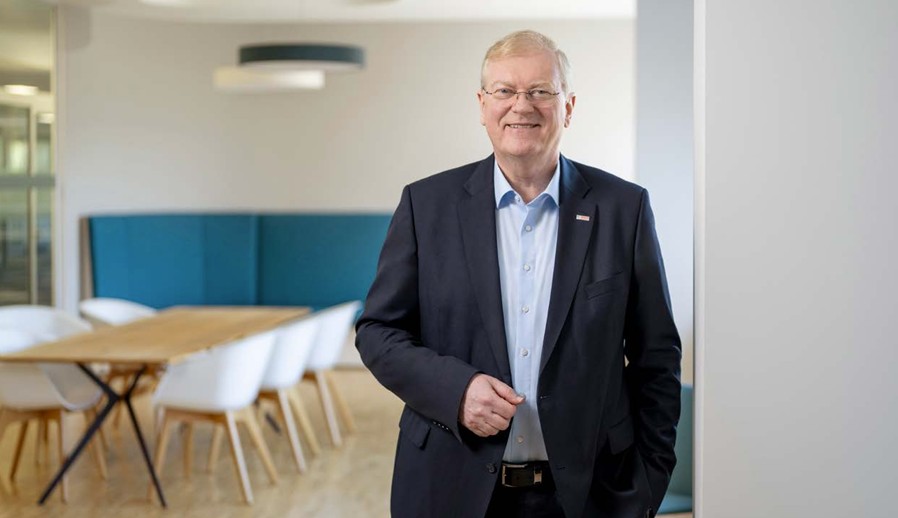
Speaking on the company’s direction, Dr. Stefan Hartung, Chairman of the Board of Management, Robert Bosch GmbH, said the company is focused on shaping future trends while also improving profitability through structural changes and cost measures. “Innovation across all our businesses is key to ensuring profitable growth,” he noted, highlighting that competitiveness remains the foundation for long-term success.
A year of resilience, but with pressure on margins
Bosch’s 2025 performance reflects both stability and strain. The company recorded revenues of €91 billion, slightly higher than €90.3 billion in 2024, with a growth of 4.1 % after adjusting for currency effects. However, profitability came under pressure, with operating margins falling to 2 % from 3.5 % a year earlier.
This drop was largely due to significant restructuring efforts, including provisions of €2.7 billion linked to structural and workforce adjustments aimed at improving future competitiveness. These changes, particularly in Germany, are part of Bosch’s broader plan to stay cost-efficient in an increasingly price-sensitive global market.
Strategy 2030
At the core of Bosch’s long-term plan is its Strategy 2030, which aims to position the company among the top three suppliers in its key markets. While cost control remains important, Bosch believes differentiation through innovation will be its real advantage.
Dr. Hartung pointed out that global competition, especially from markets like China, is driving down prices in the automotive sector. In response, the company is focusing on developing region-specific solutions while maintaining global quality standards. Its wide international presence allows it to adapt products and supply chains to local needs without compromising on performance.
Slow growth outlook, but strong focus on future investments
Bosch expects global economic conditions to remain challenging in 2026, with uncertainty driven by geopolitical developments, including the ongoing conflict in the Middle East. Despite this, the company has started the year on a steady note, with revenue in the first quarter roughly matching last year’s levels and showing around 5 % growth after currency adjustments.
Mr. Markus Forschner, Member of the Board of Management and CFO, Robert Bosch GmbH, said the company is working to strengthen its competitiveness and resilience, while also ensuring it has enough financial flexibility to invest in future technologies. For the first time, Bosch will publish interim financial reports to improve access to capital markets, even though it continues to maintain strong internal funding capabilities.
Sensors, AI and software: the next big growth engines
Bosch is placing strong bets on emerging technologies, especially in sensor technology and microelectronics. The global sensor market is expected to grow significantly, and the company sees major opportunities in areas like robotics and automated driving.
Its latest BMI5 sensor platform is designed to help robots navigate complex environments, while inertial sensors are becoming critical for autonomous vehicles, enabling them to function even without GPS or camera inputs.
At the same time, Bosch is investing heavily in automotive software, a market expected to reach €200 billion by 2030. The company is developing AI-driven solutions that can personalise the driving experience, including systems that recognise drivers and adjust vehicle settings automatically.
This focus is already translating into business. In 2025, Bosch secured orders worth €10 billion in driver assistance systems, sensors and vehicle computers. It also plans to deliver over seven million components for electric vehicles this year, underlining its growing presence in the electrification space.
India emerges as a key growth and manufacturing hub
India is becoming increasingly important in Bosch’s global strategy. The company recently announced a joint venture with Tata AutoComp Systems to develop and manufacture electric axles and motors for the Indian market.
This move reflects Bosch’s broader approach of localising production and tapping into fast-growing markets like India, which are expected to play a major role in the global transition to electric mobility.
AI transforming consumer and services business
Beyond mobility, Bosch is also using artificial intelligence to drive growth in its consumer goods and services businesses. From AI-enabled ovens with voice control to advanced power tools with radar-based detection systems, the company is integrating smart technologies across its product portfolio.
Its services division is also expected to see strong growth, driven by AI-based solutions in areas such as mobility services, fleet management and logistics support.
Financially stable, but cautiously optimistic
Despite the challenges, Bosch remains financially strong. It generated a positive free cash flow of €300 million in 2025 and maintained a high equity ratio of over 41%. While liquidity declined slightly, the company continues to invest heavily in future technologies like electromobility, semiconductors and advanced braking systems.
Across business segments, growth remained modest, with mobility, industrial technology and consumer goods seeing limited gains, while energy and building technology showed stronger growth, albeit with lower margins due to one-off costs.
The road ahead
Bosch’s story today is one of balance; on one hand, it is navigating a difficult global environment marked by uncertainty and pressure on margins. On the other, it is doubling down on innovation, investing heavily in technologies that will define the future.