

By Bharath Krishna Rao CEO & Co – Founder, Emobi

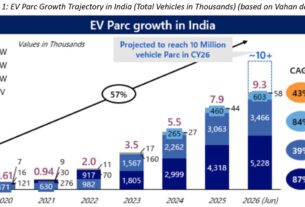
India’s transition to electric mobility is no longer a distant initiative; it is unfolding on city streets, in small towns, and across highways. Over the past few years, electric two-wheelers and three-wheelers have moved from being niche products to everyday transport choices. In 2023 alone, India recorded over 1.5 million EV sales, with electric scooters, bikes, and e-rickshaws creating the bulk of adoption. Behind these numbers lies a deeper story, one that goes beyond sustainability and speaks directly to livelihoods.
The EV transition represents one of the most significant micro entrepreneurship opportunities India has seen in decades. The auto sector has always been driven by small businesses, local mechanics, spare parts dealers, roadside garages, transport operators, and fleet owners. As mobility changes direction toward electricity, the ecosystem around it is developing, creating new income streams for those willing to adapt.
Yet the transition is not without its challenges. Traditional mechanics who have spent years mastering internal combustion engines now face a technology shift. EVs have fewer moving mechanical parts but rely heavily on electronics, battery systems, and controllers. Many small garage owners worry that their skills may become outdated. At the same time, small transport operators are hesitant to invest in electric vehicles due to higher upfront costs, even though operating expenses are significantly lower than petrol or diesel vehicles. Charging infrastructure, especially outside major cities, remains inconsistent, which also slows adoption.
However, within these challenges lie clear opportunities. The demand for charging infrastructure is growing steadily. As more EVs hit the road, localised charging solutions are becoming essential. Small entrepreneurs are beginning to install charging points in residential societies, parking lots, kirana stores, and commercial spaces. With moderate initial investment, a charging point can generate stable monthly income while increasing customer footfall for existing businesses. In tier-2 and tier-3 cities, this model is particularly promising because infrastructure gaps are more visible.
Battery swapping is another area that has started reshaping last-mile mobility. For e-rickshaw drivers and delivery partners, time is money. Waiting hours for charging directly impacts daily earnings. Swapping stations reduces downtime to minutes, enhancing productivity and income stability. Entrepreneurs who operate small battery swapping hubs are creating recurring revenue and income models while serving the rising needs of delivery fleets and urban mobility providers. As e-commerce and hyperlocal deliveries continue to rise at strong annual rates, demand for reliable electric mobility solutions will only increase.
Maintenance and repair present another important opportunity. Although EVs require less systematic servicing than conventional vehicles, they still need diagnostics, software updates, battery checks, and controller repairs. The market for skilled EV technicians is still developing & evolving. Traditional mechanics who invest in upskilling can reposition themselves as specialised EV service providers. Training programs and certification initiatives are slowly gaining momentum, but scale remains crucial.
When a small-town mechanic becomes confident in handling electric scooters, the ecosystem becomes more resilient and inclusive.
The segment focusing on used auto parts and refurbishment is a significant area for opportunity. India currently has a well-established informal market for used spare parts. However, with the projected increase in EV adoption, there will be an increasingly urgent need for organized networks dedicated to resale and recycling.
Battery lifecycle management stands out as particularly critical. New business verticals can be created by repurposing used EV batteries for energy storage or by responsibly recycling their components. Entrepreneurs who capitalize on this space early can establish sustainable businesses that fully embrace the circular economy model.
Financing continues to be a main concern for micro-entrepreneurs. While EVs typically offer 30 to 40% lower operating costs compared to fuel-powered vehicles, the upfront price stays higher. Innovative financing models are beginning to address this issue. Leasing options, subscription-based usage, and battery-as-a-service models decrease initial capital requirements. Fintech platforms and non-banking financial institutions are increasingly tailoring products specifically for EV buyers, using vehicle usage data to reduce risk. For many small operators, such models are the difference between reluctance and adoption.
Skill development may ultimately determine how inclusive this transition becomes. Technology without training creates barriers. Structured EV-focused skill programs, practical workshops, and partnerships between manufacturers and local service providers can accelerate capacity building. When knowledge is decentralised, opportunity follows. A trained technician in a semi-urban area not only earns more but also supports local EV adoption by building consumer confidence.
India’s transition to electric vehicles (EVs) offers more than just environmental and policy benefits; it presents a significant opportunity for livelihood generation. The country’s mobility sector has historically been characterized by an informal, entrepreneurial, and community-based structure. Rather than replacing this structure, the shift to electric mobility will transform it, potentially spawning numerous micro-enterprises.
This new EV ecosystem can create opportunities for charging operators, battery service providers, fleet managers, technicians, refurbishers, and logistics partners. For founders, the true measure of India’s EV success will not be the volume of vehicles sold or the subsidies distributed, but the extent of economic participation. This success will be evident when a mechanic can upgrade their workshop, a small retailer increases their income by adding a charging unit, or a delivery driver realizes higher savings due to lower running costs. The focus should therefore be on fostering broad economic inclusion within the EV journey.
India’s transition to clean mobility must be equitable. By providing micro-entrepreneurs with essential support including financing, training, robust infrastructure, and stable policies they can be empowered as the key drivers of the electric vehicle revolution. This initiative will not only advance electric adoption but will also strengthen livelihoods and bolster the nation’s economic base from the grassroots level.