
Electric trucks operating with two-driver teams stand to benefit significantly from charging capacities exceeding one megawatt. Even in situations where overnight charging is not possible, ultra-fast charging can substantially reduce vehicle downtime and improve operational efficiency.
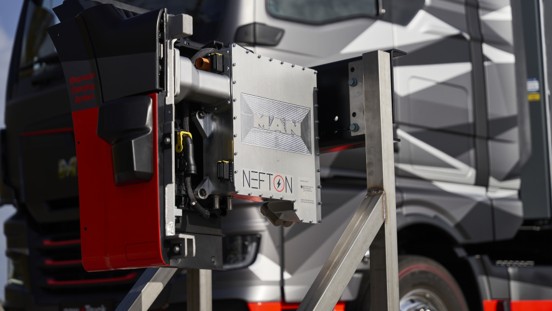
MAN Truck & Bus, together with its partners in the NEFTON 3000 funded project, has achieved a major technological breakthrough by successfully realising a stable charging current of 3,000 amperes between a vehicle and test bench infrastructure. The milestone represents a significant advancement in megawatt charging technology and expands the future operating possibilities for battery-electric commercial vehicles.
Extensive Testing Validates High-Power Charging
A comprehensive series of tests conducted at the Technical University of Munich and the Fraunhofer Institute for Solar Energy Systems (Fraunhofer ISE) in Freiburg has generated robust data on the thermal behaviour, switching components, cooling systems and safety architecture of a charging path capable of supporting charging capacities of up to three megawatts (MW) in the future.
The charging performance demonstrated in the NEFTON project addresses one of the industry’s most critical objectives – ensuring that charging times are compatible with real-world transport operations. The technology brings closer the possibility of an electric truck recharging enough energy for approximately 400 km of driving range in just 10 to 15 minutes.
This capability could prove especially valuable in scenarios where charging is not possible during legally mandated driving breaks. It would also benefit transport operations that begin without overnight charging, enabling vehicles to return to service much more quickly. In addition, fleets operating with two-driver teams could significantly reduce downtime. Looking further ahead, ultra-fast intermediate charging several times a day could also enable manufacturers to reduce battery sizes without compromising operational efficiency.
New Components Designed for Megawatt Charging
Achieving charging capacities in the megawatt range required several key components to be redesigned within the NEFTON 3000 project. The electrical current path was optimised to minimise resistance, as extremely high currents generate substantial heat losses.
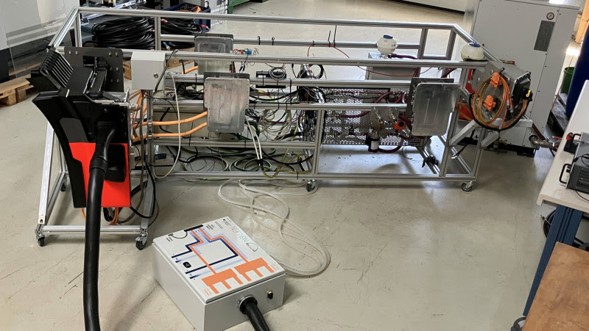
The liquid cooling system for cables, connectors and distribution units was engineered to keep all components within permissible temperature limits while meeting demanding thermal and electrical requirements. Contactors and shutdown devices were also developed to handle high switching capacities while maintaining stringent safety standards. At the same time, engineers focused on ensuring vehicle-ready integration, balancing installation requirements, weight and safety considerations.
Next Step: High-Power Battery Systems
While the successful 3,000-ampere demonstration marks a major milestone, charging capacities well beyond one megawatt will require a new generation of battery systems specifically designed for such high charging rates.
Future battery technologies will need optimised cell chemistries, module designs and electrical interconnections capable of efficiently handling extremely high currents. Corresponding upgrades to charging infrastructure will also be necessary to fully realise the potential of ultra-high-power charging.
Industry Collaboration Driving Innovation
The NEFTON project consortium comprises MAN Truck & Bus, AVL, the Technical University of Munich, Fraunhofer ISE, Prettl Electronics Automotive, the Research Center for Energy Economics and the Deggendorf Institute of Technology. The project received funding from the German Federal Ministry for Economic Affairs and Climate Action and was supported by the DLR project management agency.
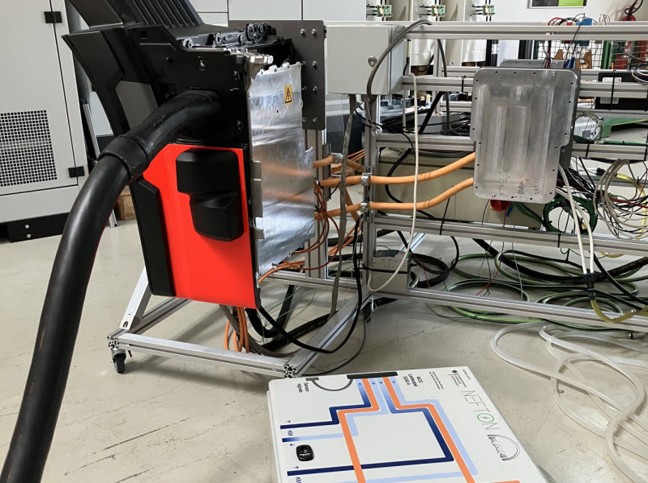
An important milestone had already been achieved in July 2024 when MAN unveiled an eTGX capable of charging at one megawatt. The latest achievement raises the charging capability on the test bench to 3,000 amperes, representing another significant step forward.
Following the completion of the NEFTON project, the TRATON Group will continue the development work. The knowledge gained will support the advancement of production-oriented high-current charging systems, as well as future studies on bidirectional charging functions and Megawatt Charging System (MCS) technology capable of delivering up to 3,000 amperes.