
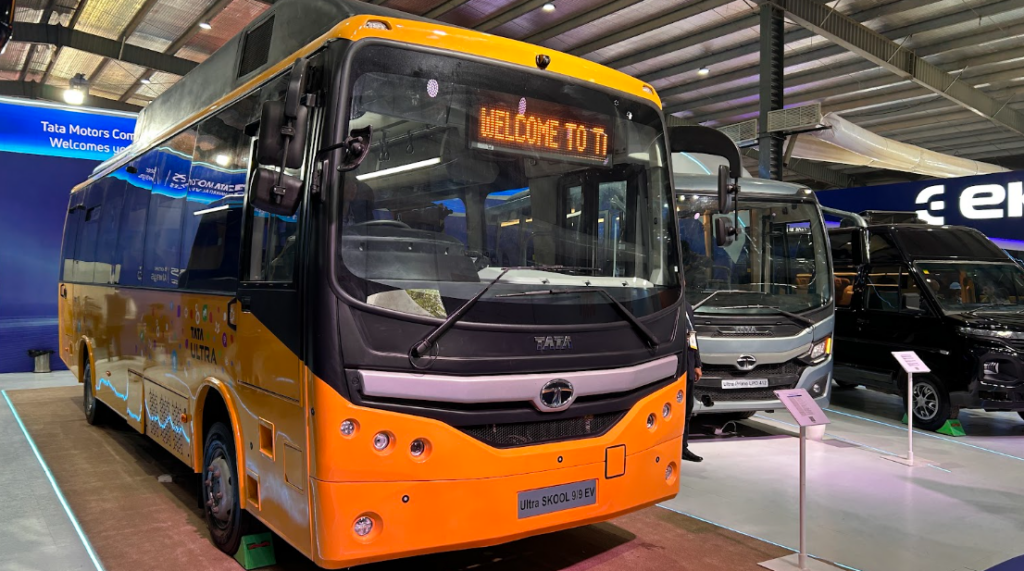
Among all the products on display, one stood apart — an electric school bus designed specifically for neurodivergent children, a segment that the automotive industry has rarely, if ever, addressed with such deliberate care.
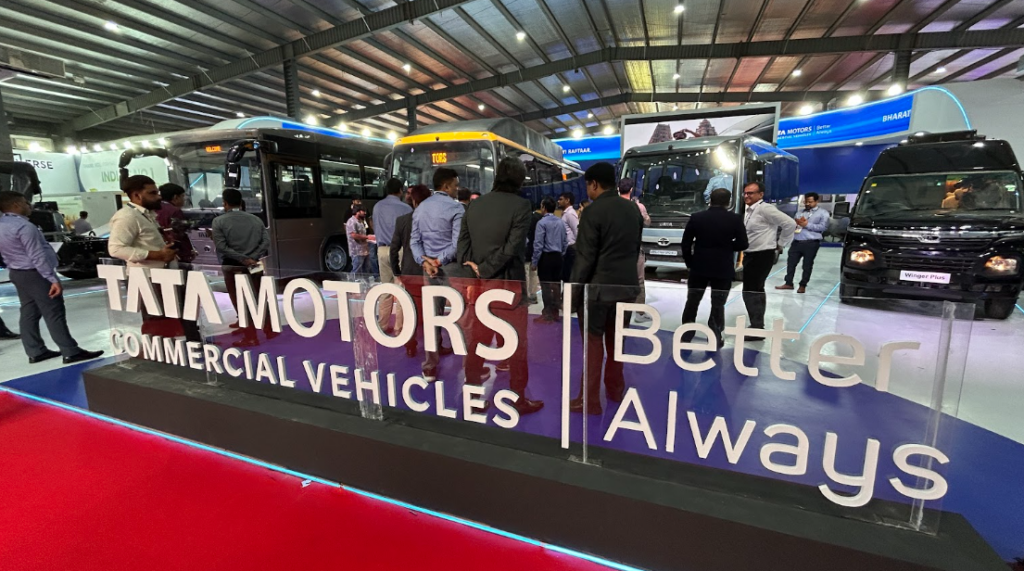
Tata Motors arrived at Prawaas 5.0 with one of the most diverse and thoughtfully curated displays at the exhibition — six products spanning last-mile connectivity, corporate travel, school transportation, intercity coaching, and export markets, united by a single theme of customer centricity, safety, and sustainability.
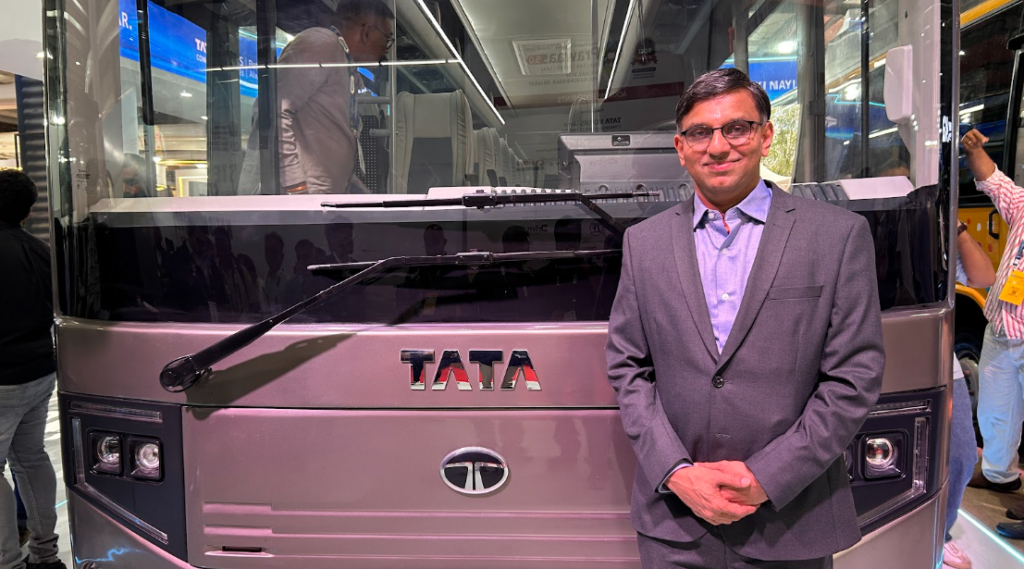
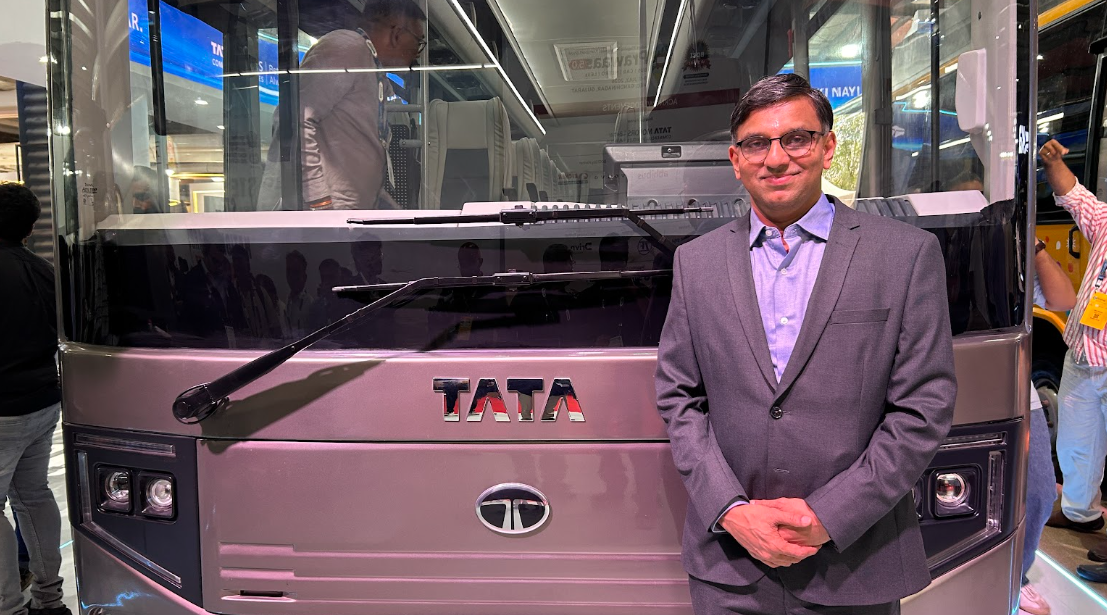
Mr. Anand S, Vice President & Business Head, Commercial Vehicle Passenger Business
The product that drew the most attention, and perhaps rightly so, was the EV school bus developed specifically for neurodivergent children. Neurodivergent simply means that a person’s brain works differently from what is considered typical — the way they think, process information, and experience the world around them is unique to them.
Mr. Anand S, Vice President & Business Head, Commercial Vehicle Passenger Business, said, “The bus was not a concept — it was born out of a direct request from a customer in Odisha who reached out to Tata Motors for help. The engineering and bodybuilding teams spent a full day at the institution understanding specific requirements before developing the bus. The result addresses the unique needs of children who are sensitive to light, sharp edges, and unfamiliar environments. Anti-slip flooring, appropriate seating, seat belts, and carefully considered interior design are all part of the package. Most significantly, the bus is fitted with a wheelchair lift mechanism — the door opens, the lift extends, the wheelchair is loaded, and the lift returns inside. It is an electric vehicle, meaning the children who need it most are being transported in a clean, zero-emission bus that is also purpose-built for their safety and comfort.”
The Magic EV, also on display, extends the company’s well-established Magic platform into the electric space. Designed for last-mile connectivity, it is the first certified four-wheeler passenger EV of its kind and is aimed at Tier-2 and Tier-3 towns, district headquarters, village-to-taluk routes, and metro station connectivity. It is expected to be launched soon.
The Winger, already established in the nine-seater segment, was displayed in a variant fitted with plush seating targeted at corporate and leisure travel — a step up in premium positioning for a vehicle that has already found strong market acceptance.
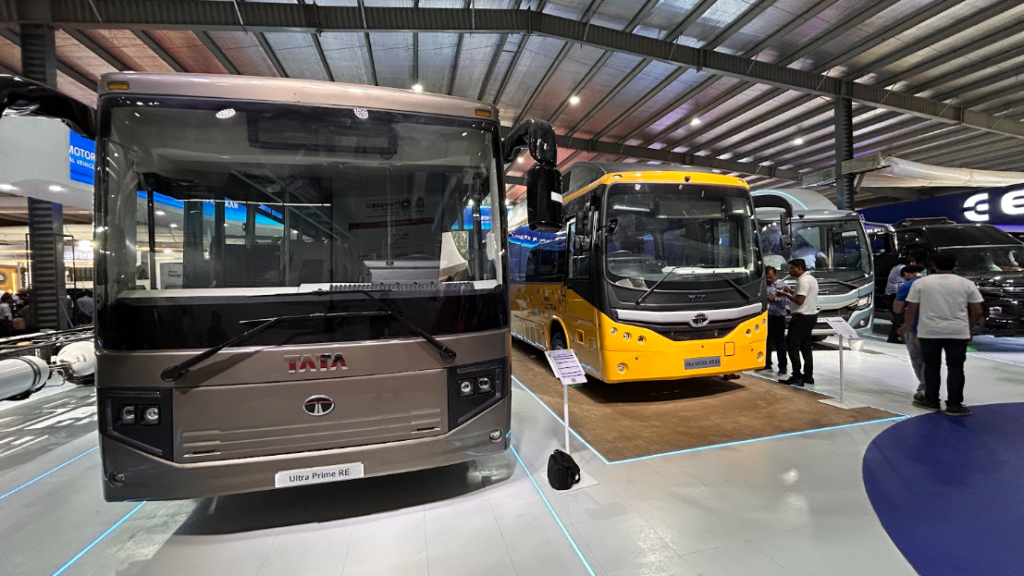
Making its first public appearance at Prawaas, was the Ultra Prime — a 2,340mm-wide luxury bus with a front door, designed for corporate travel and tours and travel operators. It comes loaded with three-point seat belts, pushback seats, a driver monitoring system, individual AC vents, and all relevant safety features, aimed at operators who want to offer a genuinely premium passenger experience.
The Left-Hand Drive 11-metre rear-engine midi bus is another significant product on display, and one that reflects Tata Motors’ growing export ambitions. Already being shipped to the Middle East, this bus is suited for staff transportation and leisure travel, with a 2×2 pushback seat configuration, individual AC vents, a flat low floor, rear luggage space, a completely new fascia and dashboard, a 360-degree camera, driver monitoring system, electronic stability control, and a rear-mounted engine that significantly reduces cabin noise.
Completing the display is a CNG bus chassis fitted with a 200-horsepower engine, capable of running an AC bus for 500 to 550 kilometres on a single fill. In a market where CNG infrastructure is widespread and operators are looking for long-range solutions without electrification, this addresses a real and underserved need, he explained.
Beyond the products, Tata Motors also showcased its in-house telematics platform, Fleet Edge — a connected vehicle system that tracks location, monitors driver behaviour, counts passengers, and provides driver training inputs to improve fuel efficiency and reduce harsh braking and acceleration. For school buses, it enables parents and school administrators to track the vehicle in real time. For fleet operators, it is a tool for managing cost and improving uptime, he pointed out.
EV penetration in the bus segment currently stands at 4 to 6%, and the company expects that to rise to 20 to 25% within five years. Tata Motors has already deployed 3,800 EV buses under its Smart City Mobility solutions, covering 53 crore kilometres with uptime of over 95%. The EV footprint, which covered 10 cities two years ago, now spans 23 cities and is on track to reach 50 cities by the end of the financial year, he said.
According to him, Prawaas was less a showcase and more a statement — of how wide the bus market actually is, and how seriously Tata Motors intends to cover every part of it, he added.