

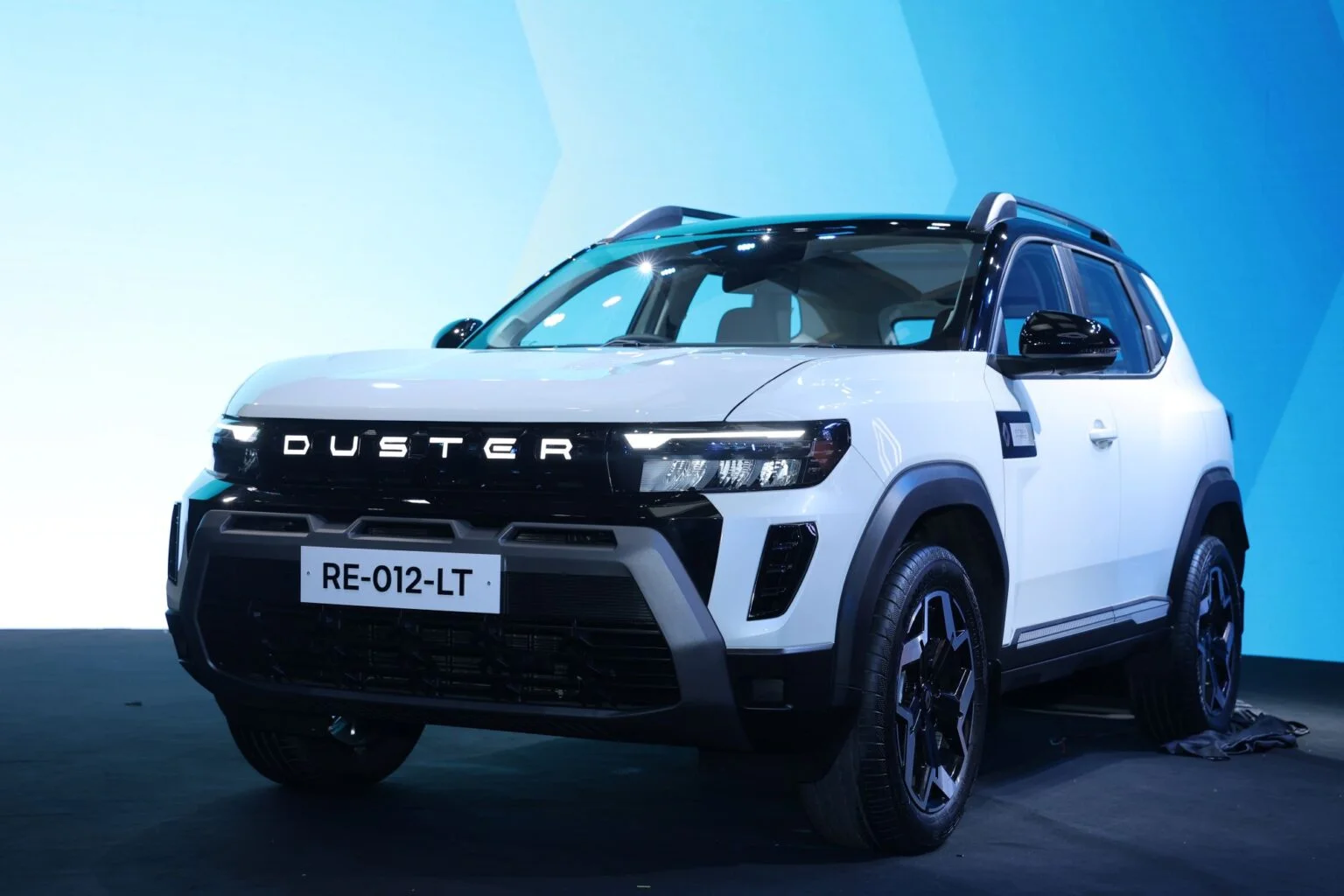
An engine that sleeps most of the time, a gearbox with no synchronisers and a battery cooled by refrigerant – the engineering behind the new Duster Strong Hybrid E-Tech 160.
For nearly 140 years, buying a car came down to one choice: petrol or diesel. That choice no longer tells the whole story. As the old engine reached its limits, customers now want range and affordability, but also lower running costs, better performance and lower emissions.
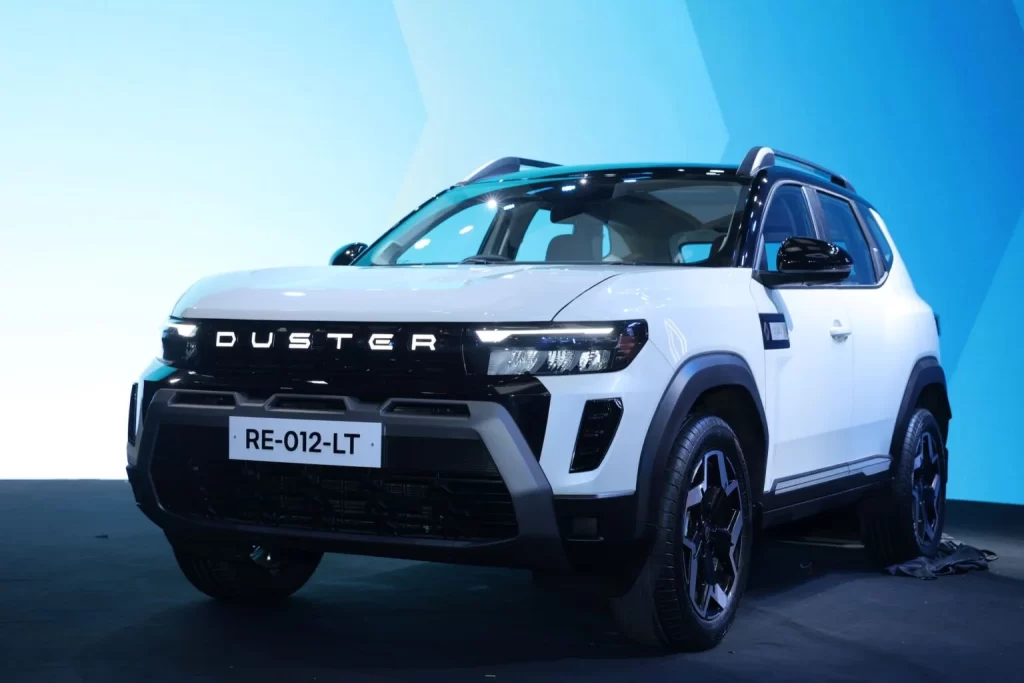
At the launch of the new Duster Strong Hybrid E-Tech 160, the OEM reiterated that no single legacy powertrain can deliver everything customers want, so the industry is moving towards a mix of hybrids, electric vehicles and other low-carbon options. Buyers no longer ask “petrol or diesel?” but what range they need, what the car will cost to run, and where they will refuel or recharge. Technology is now a response to customer needs, and Renault’s answer is the strong hybrid.
Therefore, Renault launched the new Duster Strong Hybrid E-Tech 160, in India at an introductory starting price of ₹16.99 lakh, making three important claims. It has an ARAI-certified fuel efficiency of 29 km/l. It can run in pure electric mode for up to 80% of city driving. And the OEM says it saves up to 29% in fuel compared with diesel. None of this needs a charging point. The battery refills itself while you drive and brake.
How Does a Petrol SUV Manage this?
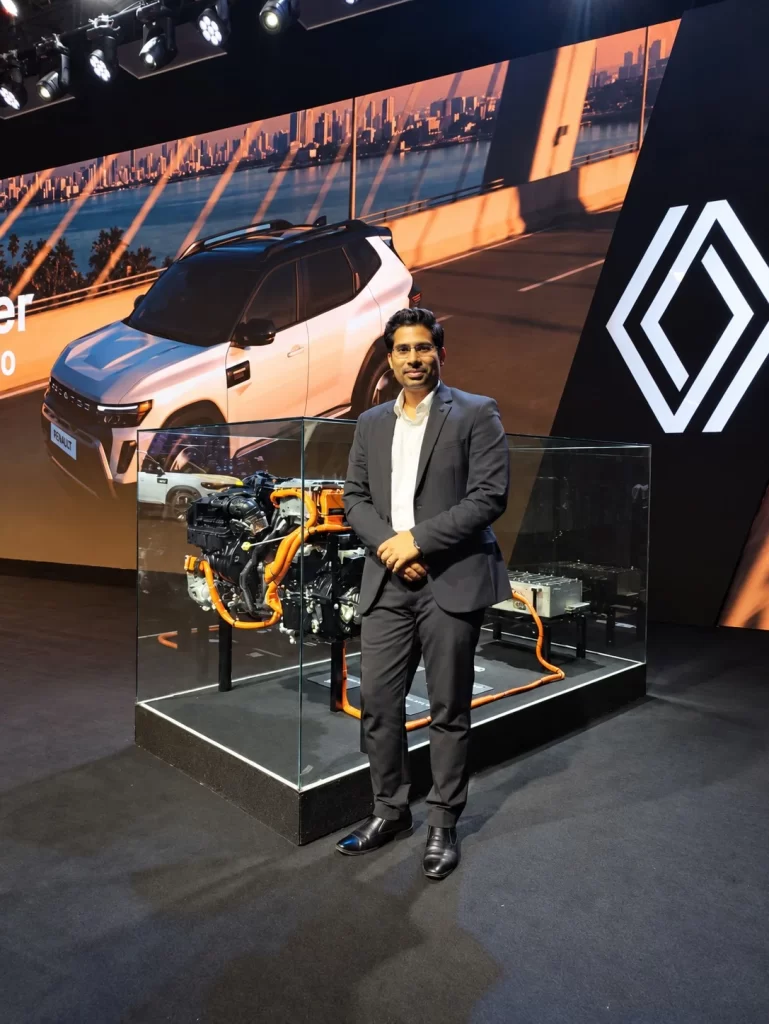
Speaking to this publication, Dr. Vikraman, Chief of Engineering at Renault India, said, it is not one clever trick but five parts working together: an engine, a battery, two electric motors and a multi-mode gearbox. To explain it, he goes back more than 130 years, when Louis Renault, a French teenager, was given a car with a 1.75 horsepower engine. He liked the car, but its transmission wasted almost all the engine’s power before it reached the wheels. So, he invented a three-speed transmission and patented it in 1899. The Duster hybrid, he said, has its roots in that invention, because its cleverest part is again a transmission.
An Engine That Knows When to Step In
The first secret, he said, is that this engine is not meant to work all the time. In an ordinary car stuck at a red light, the engine keeps idling, partly to drive the air-conditioning compressor. He compared it with running a generator to cool a room, which is inefficient. In the Duster hybrid, an electric compressor handles the cooling, so the engine can stay off. In a regular car, he said, the engine is on 100% of the time in city driving. In this hybrid it is on only about 20% of the time.
When it does wake up, it works at its sweet spot. In creeping traffic, a normal engine runs at low load, where it is very inefficient. The hybrid engine fires up briefly, runs at its most efficient point, charges the battery and goes back to sleep. It never idles at poor settings; because the electric motor handles the rest of the driving and the engine behaves almost like a small power generator.
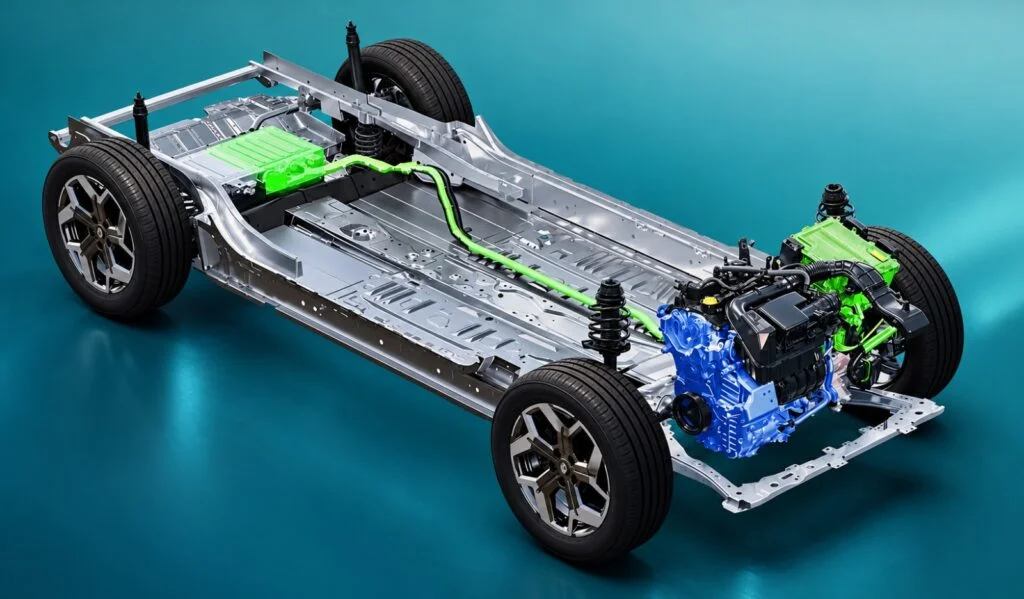
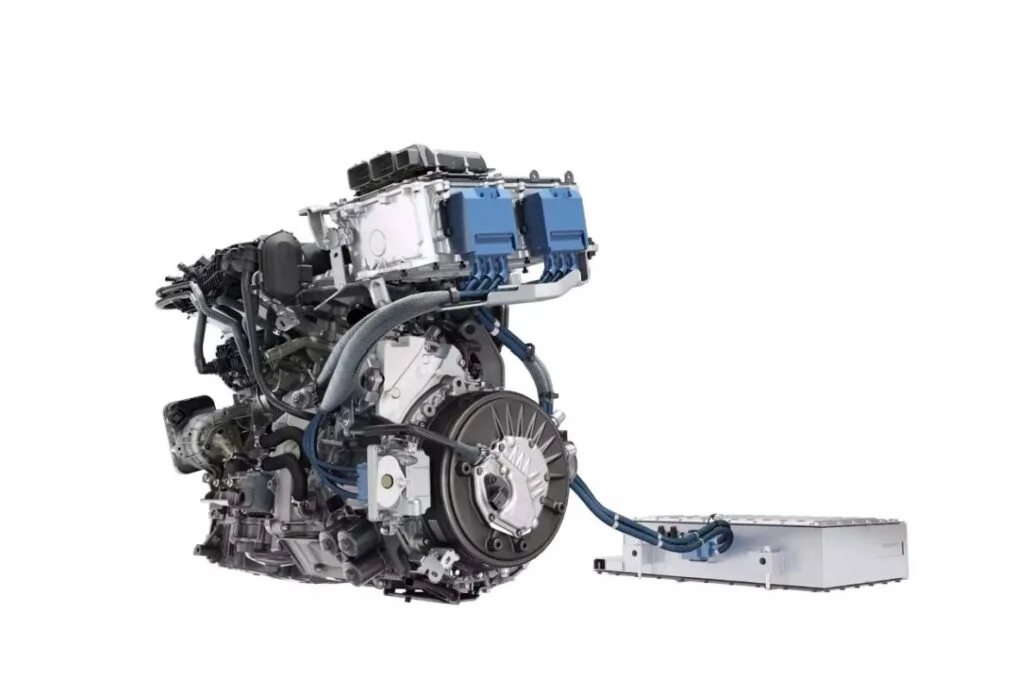
The 1.8-litre engine is also built differently from a normal petrol engine. It has no belts at all; a starter generator, a water pump and an AC compressor that are all electric, take over the jobs the belts used to do, so power is not lost to friction. The piston has a longer stroke, which turns more of each combustion into useful work. It follows the Atkinson cycle, where the expansion stroke is larger than the compression stroke, so more energy is extracted. Its compression ratio is 14:1, against about 10.5 in a conventional engine. A normal engine would knock at that level. Here, the electric motor steps in before the engine reaches the knocking zone. Fuel is injected at 350 bar, which creates a finer mist and a more even mixture. A low-pressure exhaust gas recirculation system, drawing gas after the particulate filter, calms the mixture further. Each change adds only a percent or two, but together they lift thermal efficiency from about 35% to 41%, Dr. Vikraman explained.
A Bigger Battery, Cooled by the Air-conditioner
The 1.4 kWh battery is, in his words, almost twice the size of rivals’ batteries, which he puts at about 0.6 kWh. “A larger battery means more electric running. Its cells are inspired by racing and can discharge power very quickly. Instead of being cooled by air or water, the battery is cooled directly by refrigerant from the car’s compressor. The system runs at about 250 volts, against 160–170 volts for rivals. A higher voltage means less current for the same power, and less current means less heat lost,” he highlighted.
Engineered Elimination, Enhanced Efficiency
The most unusual part is the gearbox. Most gearboxes use synchronisers, small friction cones that match the engine side-, and the-wheel side during a shift. They take up space and waste energy. The engine in the new car uses simple dog clutches instead. When it shifts, the starter generator, a motor attached to the engine, quickly raises or lowers the engine speed to match. The idea comes from racing. The space saved goes to a bigger traction motor, which enhances transmission efficiency to 98%.
The engine has four gears and the traction motor has two. In electric mode, that gives two forward and two reverse choices. In hybrid mode, the two can combine in eight ways. On the highway, the car can run on the engine alone in second, third or fourth gear, since sending energy to the battery and back would waste some. Dr. Vikraman counts 15 combinations in all. The driver does nothing. The car picks from six modes by itself, which are pure electric, pure engine, two hybrid modes, regenerative braking and charging.
Why it Shines in Traffic
This is why a hybrid is strongest in the city, he said, adding that the engine is off at standstill. “In slow traffic it runs only briefly and at its best point. When you brake, the traction motor turns the car’s motion into electricity instead of heat. So as traffic gets worse, the gap between the hybrid and a diesel grows. Both cars use more fuel in a jam but the hybrid’s figure falls by less. That is why Renault calls it the best urban SUV,” he pointed out.
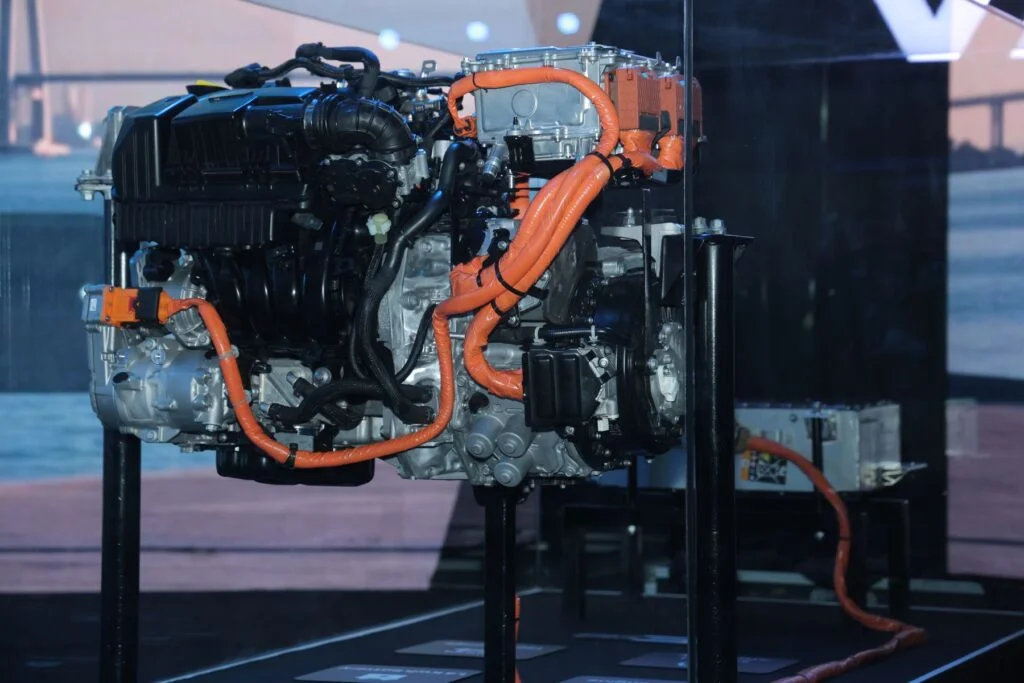
Together the engine and motor make 160 PS. Renault claims zero to 100 km/h in 9.61 seconds. The 29 km/l figure and the 50-litre tank give a calculated range of over 1,400 km. He is clear that this is the certified figure multiplied by the tank size. Real-world results will depend on traffic, driving style and how much the air-conditioner is used.
What it Means for Owners
According to him the maintenance of the car should be easier, as there are no engine belts; brake pads last longer because the motor handles most of the braking, and the engine works in a narrow, gentle range. The battery has an eight-year warranty. The hybrid adds about 100 kg, so the OEM added frequency-dependent damping to the suspension. The engine and gearbox are imported from Europe today, with plans to localise them quickly.
If localisation arrives on schedule, what may matter most is not the Duster hybrid’s mileage, but how many diesel loyalists it wins over.


